Source group · 6 artworks · 1 families
shader legends II
Shader legends II — second wave of shader canon, often ray-marched and signed-distance-heavy.
Path on disk: library_external/shader_legends_2/
No artworks match those filters. Try clearing one of the dropdowns.
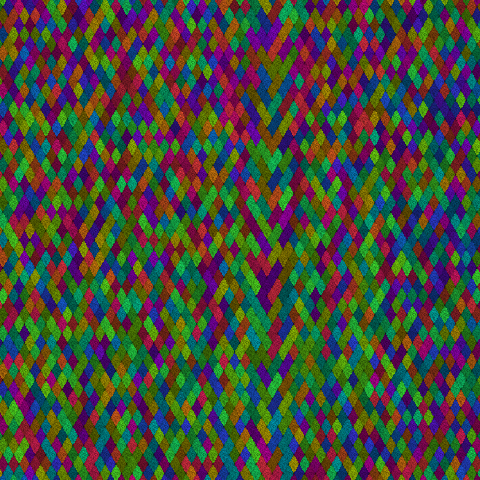
Hex Grid Tiling — axial-coord tessellation with fBM-filled cells
shader_legends_2 · HexGridTiling
A hexagonal grid is the canonical 6-fold-symmetric alternative to the square-grid hash tiling.
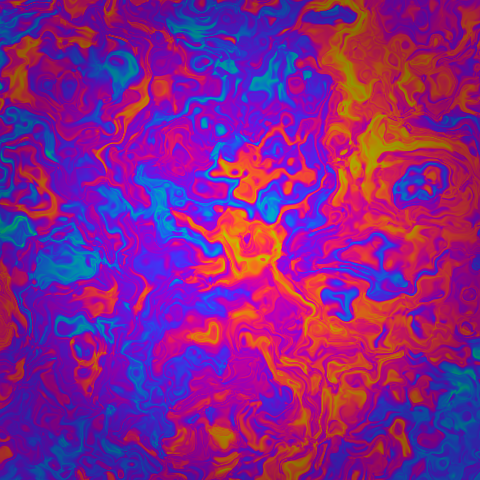
IQ Domain Warping — fbm composed with itself at 2/3 levels
shader_legends_2 · IQDomainWarping
Inigo Quilez's domain warping trick: feed a noise function *itself* as input coordinates, producing organic flowing patterns that no plain noise function can match.
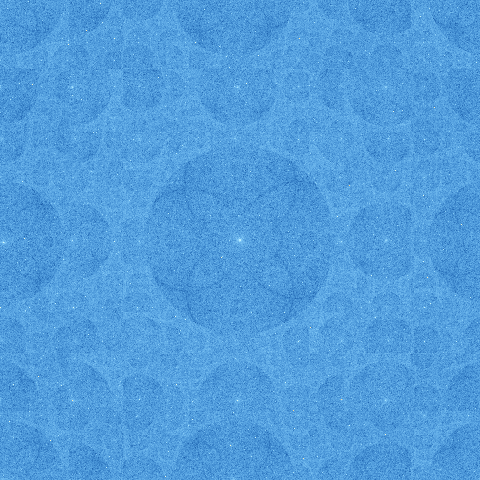
IQ Mandelbox (2D edition) — iterated box-fold / ball-fold / scale / translate
shader_legends_2 · IQMandelbox2D
The Mandelbox is a 3D fractal defined by the iterate v := scale * box_fold(ball_fold(v)) + c, parametrised by a 'scale' fold factor and the (r_min, r_fixed) ball-fold thresholds.
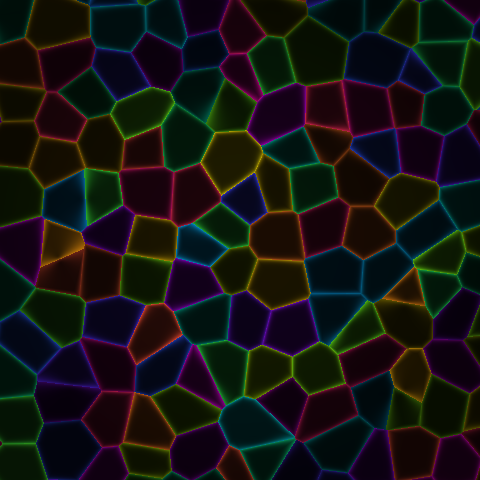
IQ Voronoi (cellular noise) — F1 / F2 distance field
shader_legends_2 · IQVoronoi
Inigo Quilez's classical 2D Voronoi / cellular noise: for each integer cell of the plane a single feature point is placed at cell_centre + jitter*(hash-0.5).
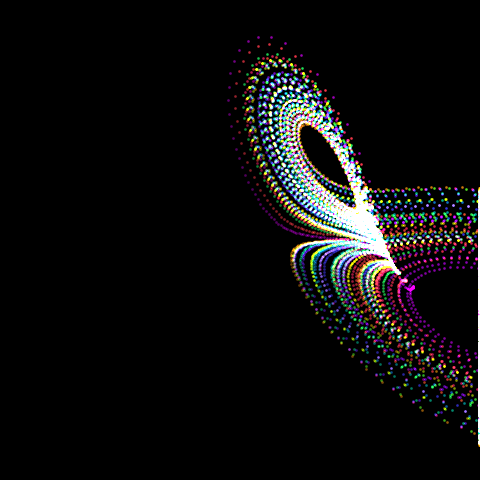
Lorenz Attractor (3D ODE) — strange-attractor trajectory with depth shading
shader_legends_2 · LorenzAttractor3D
The Lorenz system (1963) is the canonical strange-attractor: x' = sigma(y - x); y' = x(rho - z) - y; z' = xy - beta*z.
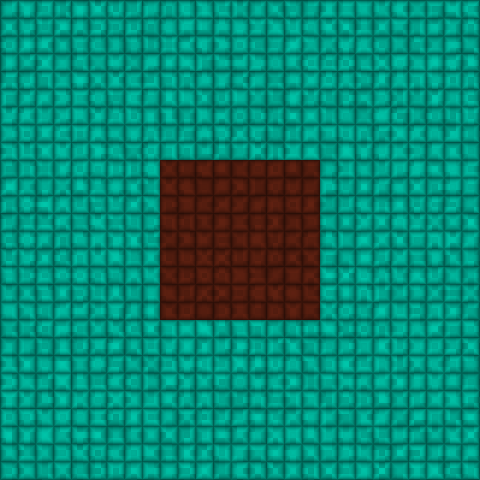
Menger Sponge, 2D Carpet edition — recursive 3x3 / centre-removal
shader_legends_2 · MengerSponge2D
The Menger sponge (1926) is a 3D fractal formed by sub-dividing each cube into 3x3x3 and removing the centre plus the six face-centres.