The Library
157 runnable artworks spanning noise fields, attractors, growth, particles, ML kernels, and shader formulas. Each one ships with a Python reference implementation, parameter spec, and a runnable sample image you can fork.
No artworks match those filters. Try clearing one of the dropdowns.
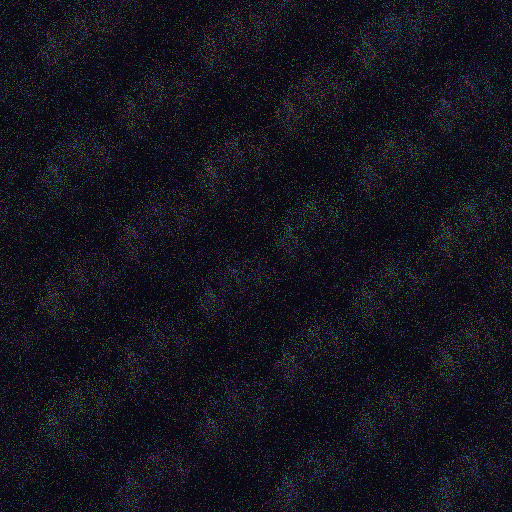
Gesture Driven Field
akten_quayola · GestureDrivenField
Particles advected through a vector field whose structure is driven by a synthetic gesture signal: a chain of sinusoids at integer-related frequencies.
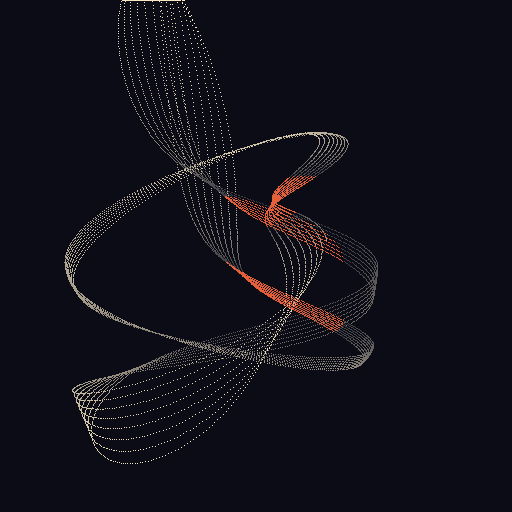
Lissajous 3D
akten_quayola · Lissajous3D
A three-dimensional Lissajous figure rendered as a single precision line drawing on a deep field.
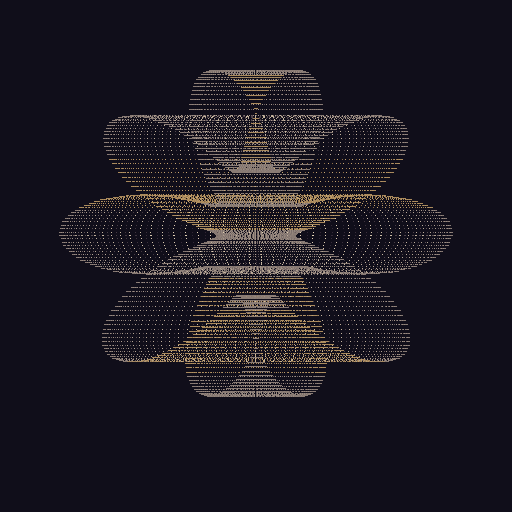
Mechanical Flower Spline
akten_quayola · MechanicalFlowerSpline
A 2D petal-radius spline r(θ) = r0 + A*cos(p*θ + δ) + B*cos(q*θ) swept 360° around a vertical Y axis to form a procedural flower-like 3D surface, then orthographically projected and depth-shaded.
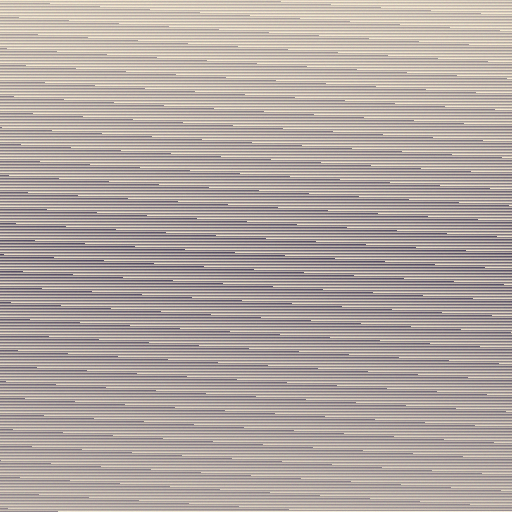
Pleated Fabric
akten_quayola · PleatedFabric
A textile grid whose vertical coordinate follows z = A * envelope(y) * sin(2π f x + phase(t)), projected obliquely onto a 2D canvas so the folds read as parallel ridges of light.
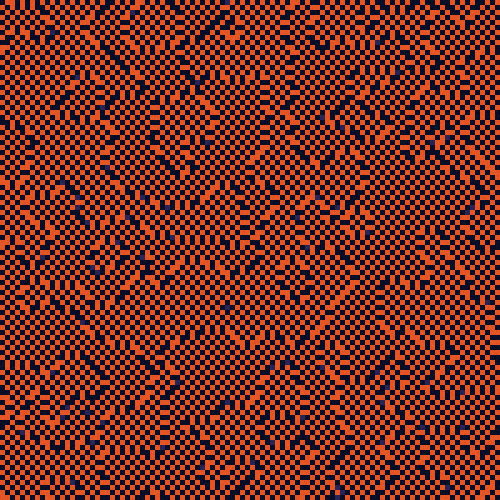
Simple Harmonic Motion
akten_quayola · SimpleHarmonicMotion
A 100x100 grid of damped harmonic oscillators driven by a periodic central impulse.
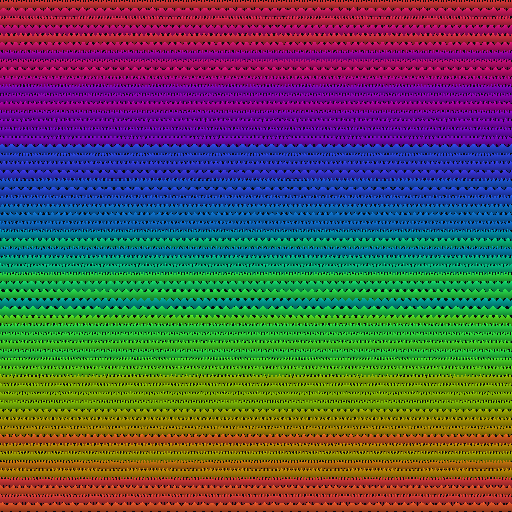
Strata Landscape
akten_quayola · StrataLandscape
A geological landscape rendered as N horizontal strata stacked vertically, each band displaced by a slowly growing sinusoid and shaded with its own hue.
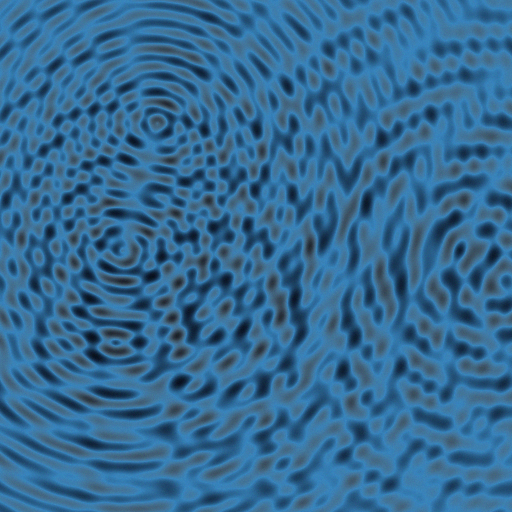
Wave Interference
akten_quayola · WaveInterference
N drifting point sources emit circular sinusoidal waves whose superposition is tone-mapped into a stormy ocean-like field.
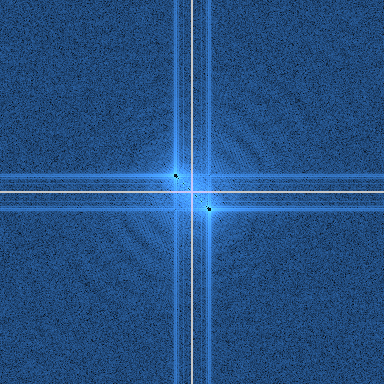
2D FFT Texture Spectrum (WebGPU butterfly FFT)
anadol_webgpu · fft2dTexture
The WebGPU butterfly 2D FFT pattern: stage by stage, a @compute shader reads two texels per output (input[p] and twiddle-weighted input[q]) and writes the combined result; after log2(N) horizontal stages, transpose, and log2(N) vertical stages, the 2D FFT is complete.
Compute Particle System (WebGPU @compute pattern)
anadol_webgpu · computeParticleSystem
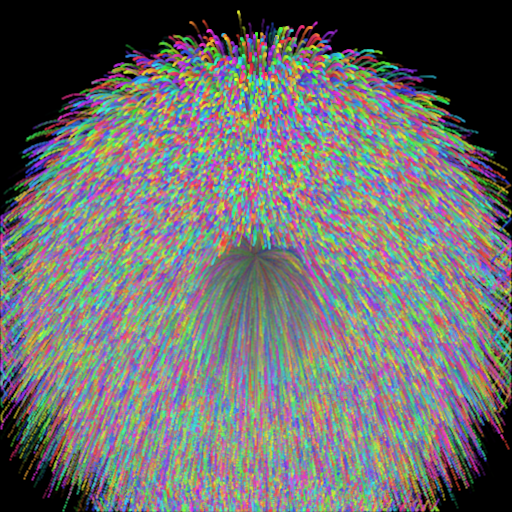
The canonical WebGPU 'compute-to-render' pattern: a @compute shader updates N particles in a storage buffer (one thread per particle, simple Verlet-style integration: v += gravity; v *= drag; p += v; bounce off walls; life++; respawn if life>max), and a render pass consumes the same buffer as vertex data to draw point sprites.
Data Particle Field (Refik Anadol — Machine Hallucinations / AI Data Sculptures)
anadol_webgpu · dataParticleField
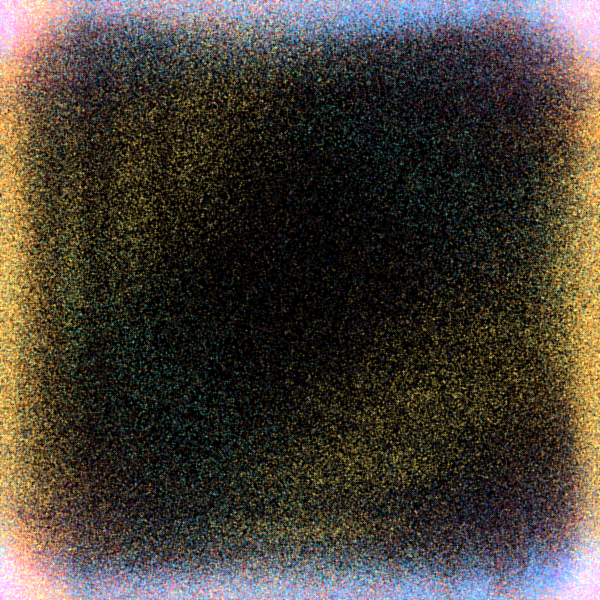
Inspired by Refik Anadol Studio's AI Data Sculptures and 'data universe' portraits (e.g.
Dreamscape Field (Refik Anadol — Dreams / Nature Dreams)
anadol_webgpu · dreamscapeField
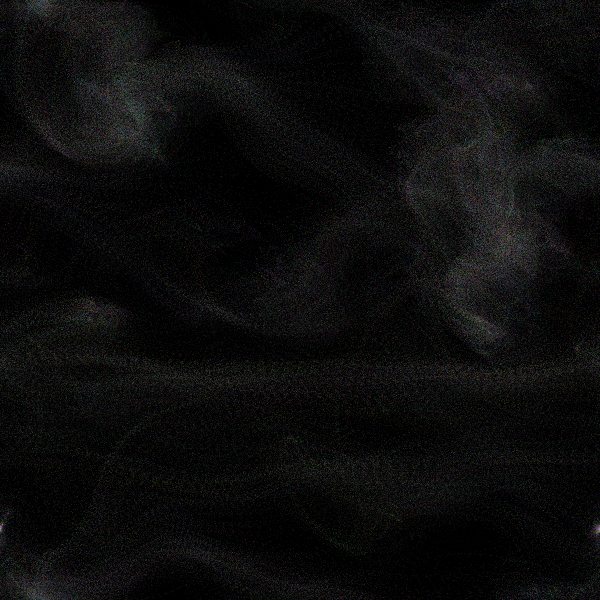
Inspired by Refik Anadol Studio's Dreams series (Nature Dreams, Urban Dreams, Space Dreams and the MoMA Fluid Dreams algorithm): a smooth low-frequency Perlin noise field drives slow global drift while a finer detail octave adds turbulent perturbation — Anadol's fluid solver aesthetic realised with cheap numpy.
Latent Walk (Refik Anadol — Unsupervised / Machine Hallucinations)
anadol_webgpu · latentWalk
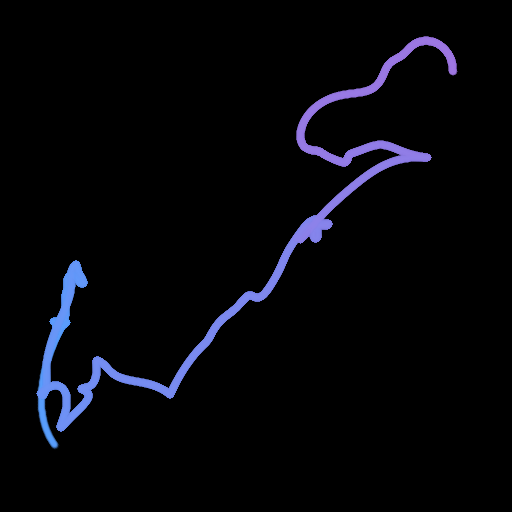
Inspired by Refik Anadol Studio's Unsupervised — Machine Hallucinations — MoMA (2022): a chain of N points is sampled from a synthetic 64-dimensional latent space (a smoothed random walk) and projected to 2D via a fixed random matrix; the path is integrated step-by-step with spherical-linear interpolation between adjacent chain points, so the rendered trail visualises the path the 'latent space browser' would take through the embedding.
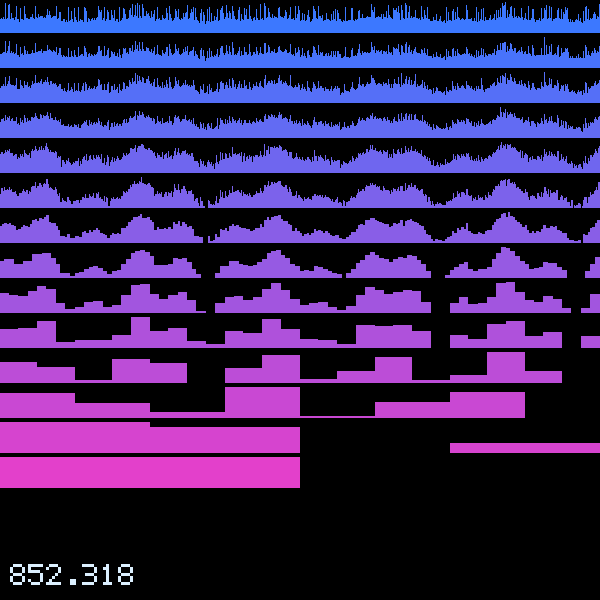
Parallel Reduction (WebGPU workgroup-shared-memory tree reduction)
anadol_webgpu · parallelReduction
The classic WebGPU parallel-reduction pattern: load N values into workgroup-shared memory, workgroupBarrier(), tree-reduce by stride (shared[lid.x] = op(shared[lid.x], shared[lid.x + stride]); stride /= 2), workgroupBarrier(), and emit per-workgroup partials from thread 0.
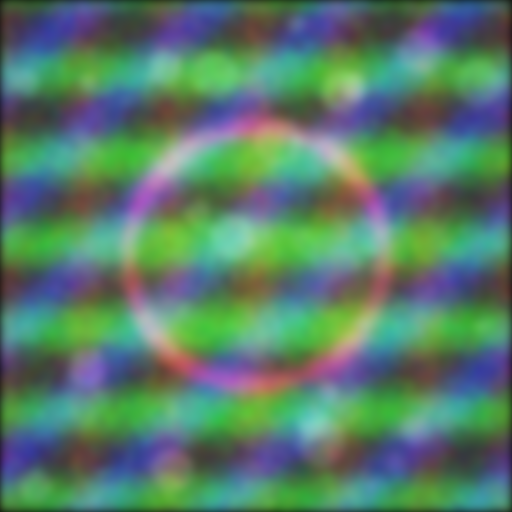
Tile Blur (WebGPU separable Gaussian tile-shared-memory blur)
anadol_webgpu · tileBlur
The WebGPU separable Gaussian blur primitive: a workgroup of TILE×TILE threads loads a tile+halo of the source image into workgroup-shared memory, workgroupBarrier(), convolves each pixel with a 1D Gaussian along the row, writes to a ping-pong texture; then a second compute pass applies the column-direction Gaussian on the intermediate texture.
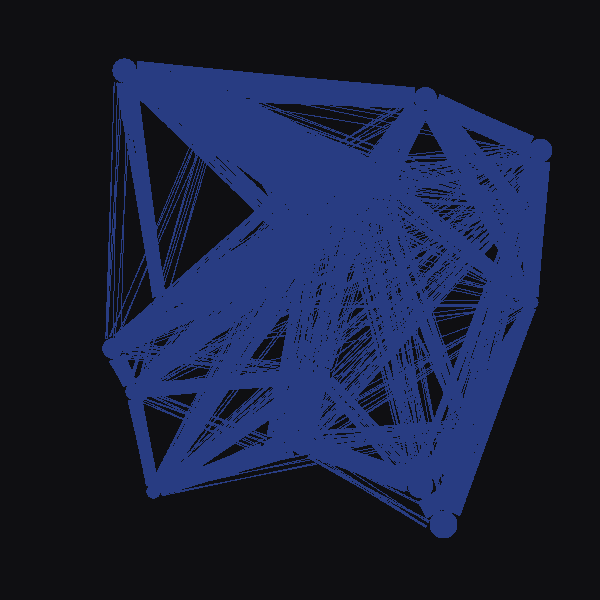
Cherniak Ringers (Dmitri Cherniak — Ringers)
art_blocks · CherniakRingers
An implementation of Dmitri Cherniak's *Ringers* algorithm (Art Blocks Curated, January 2021, 1,000 NFTs) — one of the most-cited generative-art projects of the NFT era, and the source of *Ringers #879* ('The Goose') and *Ringers #962* (acquired by LACMA).
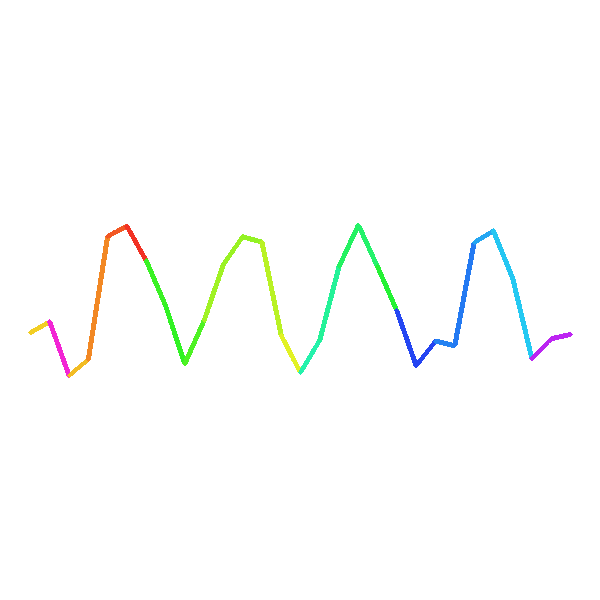
Chromie Squiggle (Snowfro / Cherniak — Squiggles)
art_blocks · CherniakSquiggles
An implementation of the squiggle-generation kernel used in Snowfro's *Chromie Squiggle* (Art Blocks #0, November 2020) — the on-chain generative-art project that launched the Art Blocks platform itself and was the work Dmitri Cherniak cited (alongside *Genesis*) as his inspiration for Ringers.
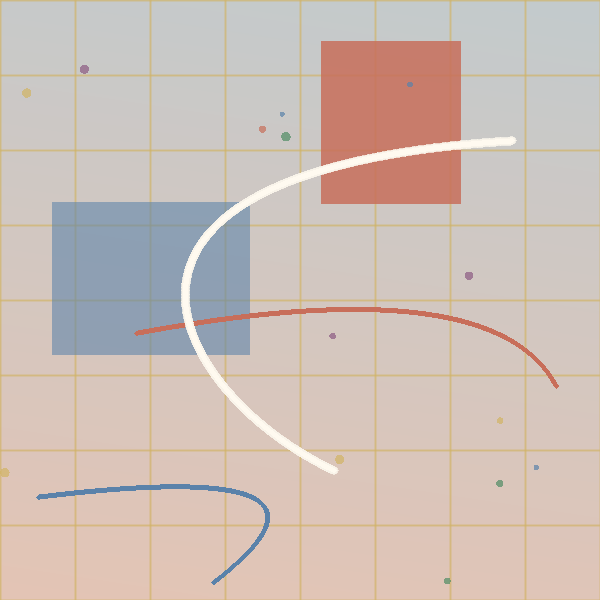
Genesis (DCA — Day-Zero Art Blocks)
art_blocks · DcaGenesis
An interpretation of DCA's *Genesis* (Art Blocks #1, November 2020) — one of three Day-Zero collections (alongside Snowfro's Chromie Squiggle and Jeff Davis's Construction Token) that minted in the first 24 hours of the Art Blocks platform.
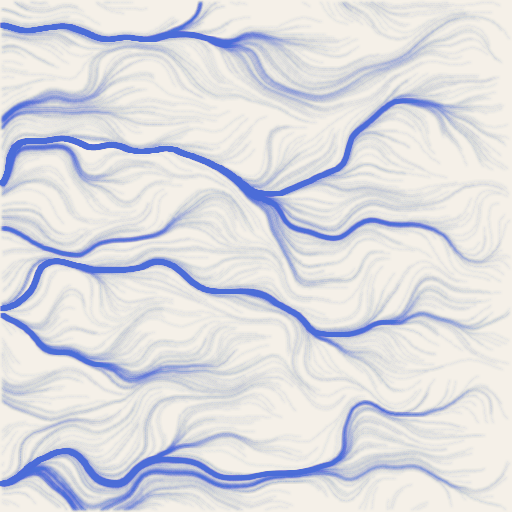
Hobbs Flow Field (Tyler Hobbs — Incomplete Control / Fidenza)
art_blocks · HobbsFlowField
The canonical perlin-noise flow-field algorithm described by Tyler Hobbs in his 2020 essay 'Flow Fields', and the algorithmic backbone of his Art Blocks Curated works *Incomplete Control* (Bright Moments, 2021) and *Fidenza* (Art Blocks, 2021).
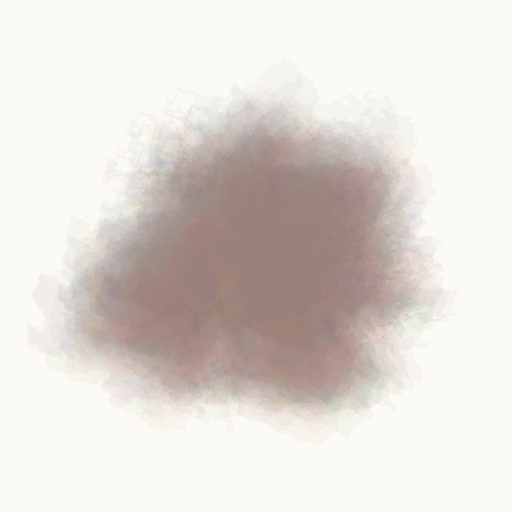
Hobbs Watercolor Blob
art_blocks · HobbsWatercolorBlob
Layered translucent Gaussian blobs with watercolor-style alpha falloff.
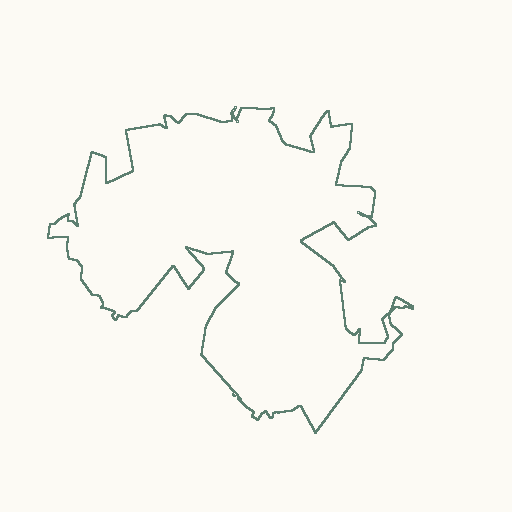
Hobbs Watercolor Edge (Tyler Hobbs — Soft Textures / Watercolor)
art_blocks · HobbsWatercolorEdge
An implementation of Tyler Hobbs' 2017 'watercolor' technique: a recursive polygon-deformation algorithm whose midpoints are jittered by Gaussian noise across many passes, then stacked with low alpha (4% per layer, 30–100 layers total) to produce the soft, ink-bleed look of wet pigment on paper.
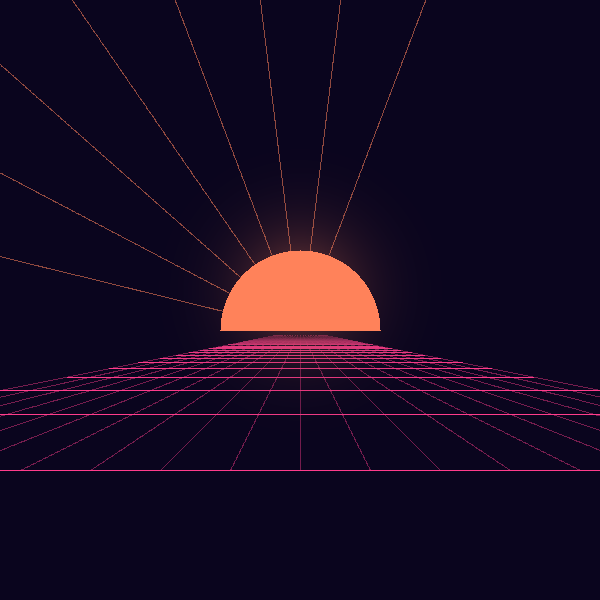
Penne 80s Vector (Aaron Penne — outrun perspective wireframe)
art_blocks · Penne80sVector
The 80s-synthwave outrun grid, the visual aesthetic Aaron Penne references in his generative-art practice (notably in *Apparitions* and his broader body of work).
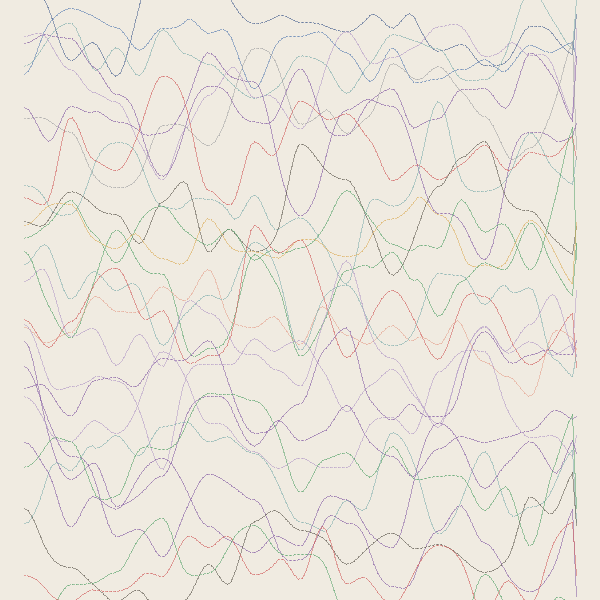
Penne Bones of the Earth (Aaron Penne — Apparitions)
art_blocks · PenneBonesOfTheEarth
Aaron Penne's signature algorithm from *Apparitions* (Art Blocks Curated, March 2021) — 'drawing multiple straight lines across the screen, and perturbing them according to an underlying noise field.
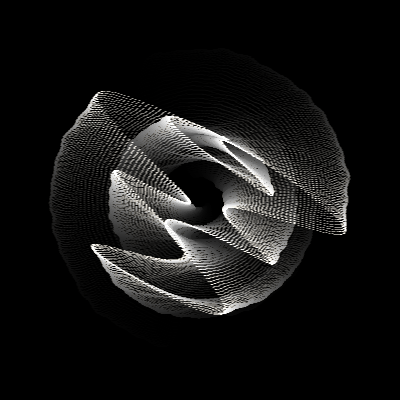
Daily Sketch Curve Morph (Synthetic Gesture)
audio_reactive · LiebermanDailySketch
A parametric polar / hypotrochoid curve whose three radii (R, r, d) are continuously morphed by independent sin-wave chains — Zach Lieberman's signature 'use mathematical functions like sin() and tan() in place of randomness' rule from his Daily Sketches project.
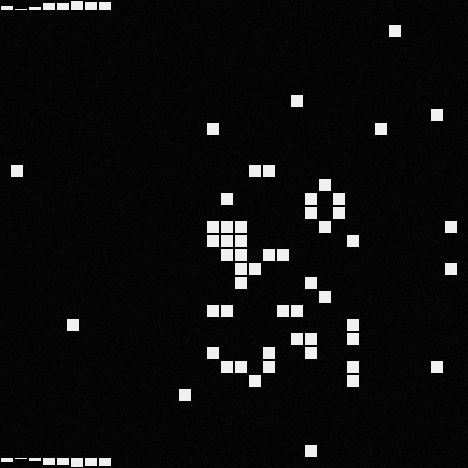
data.matrix Glitch Grid (Binary Cellular Automaton + Beat Faders)
audio_reactive · IkedaGridMatrix
A 32×32 binary cell grid plus a thin frame of beat-fader bars around the edges.
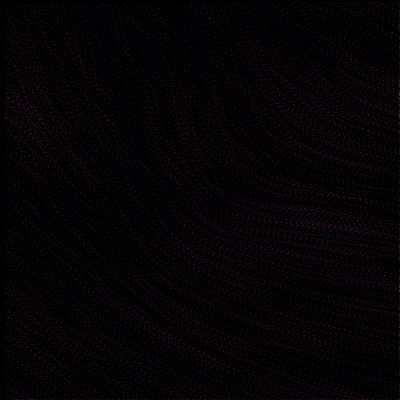
FFT-Spectrum Particle Field (Synthetic Audio)
audio_reactive · PasmaFFTSpectrum
A particle field whose velocity is driven by three FFT-magnitude bands (low / mid / high) computed from a sliding window of synthetic audio.
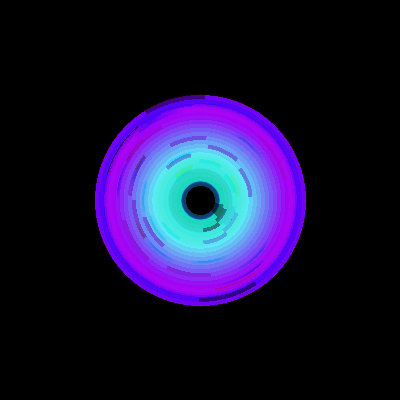
Reactive Concentric Rings (FFT-Band-Driven)
audio_reactive · PasmaReactiveCircle
N concentric rings around the canvas centre, each driven by a different FFT band (low / mid / high).
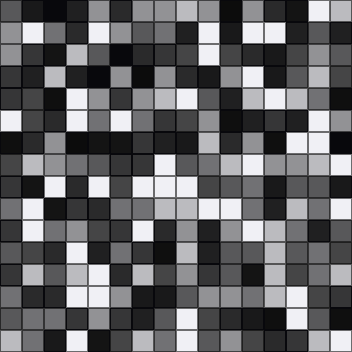
SND Grid Sequencer (Multistability Pulse Grid)
audio_reactive · SNDGridSequencer
A 16×16 grid where each cell has its own activation period (inner-loop ticks) and phase offset, modelled after Mark Fell's *Multistability* algorithm: nested inner/outer loops, impulse at each inner-loop wrap, phase-reset by the outer loop.

Boundaries
complexification_net · boundaries
Boundaries traces gradient-magnitude contours on a fractal Brownian motion noise substrate.
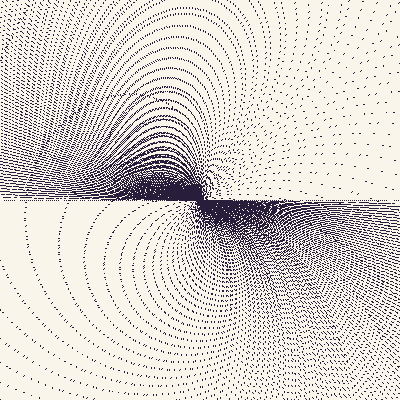
Cellular Automata Worm
complexification_net · cellularAutomataWorm
The CA Worm is an expanding construction of a one-dimensional cellular automaton.
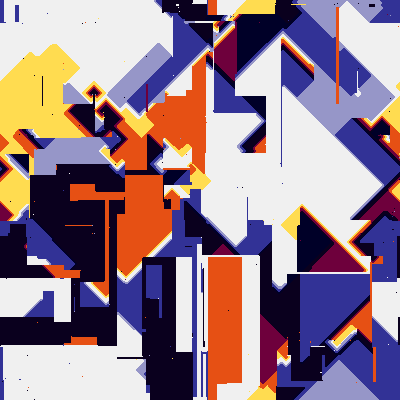
Cyclic Cellular Automaton
complexification_net · cyclicCellularAutomaton
A Greenberg-Hastings / Rock-Paper-Scissors style cyclic cellular automaton on a 2D torus.
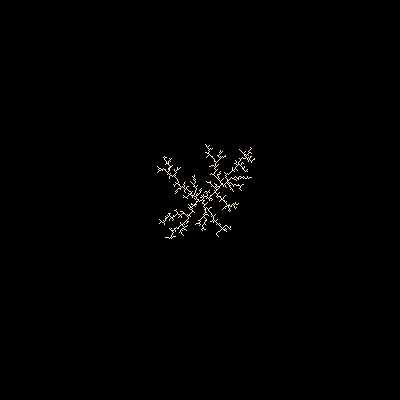
Diffusion Limited Aggregation
complexification_net · diffusionLimitedAggregation
DLA is a simulated growth process: a sticky seed sits in a 2D field, wandering particles spawn along an outer circle, take unit-length random-walk steps, and stick to the cluster whenever they touch it.
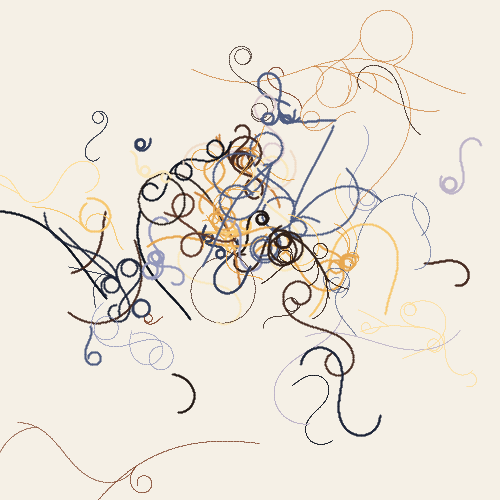
Fibers (curling brush)
complexification_net · fibers
A field of curling fibers grown from random seeds scattered across the canvas.
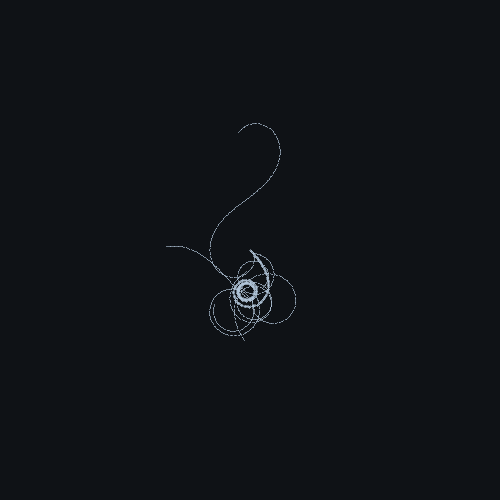
Main Vein
complexification_net · mainVein
A single, meandering recursive vein grows from the center of a dark substrate.
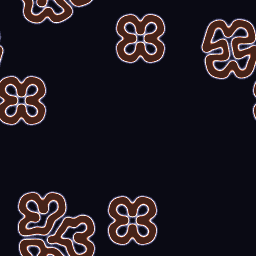
Reaction Diffusion (Gray-Scott)
complexification_net · reactionDiffusion
Gray-Scott reaction-diffusion on a torus: two virtual chemicals U (substrate) and V (catalyst) react and diffuse on a 2D grid.
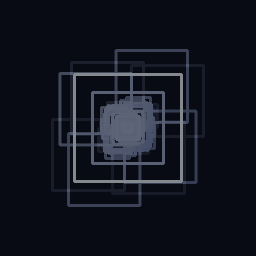
3D Menger sponge level-3 wireframe
fractals_3d_webgl · MengerSponge3DLevel3
A level-3 3D Menger sponge explicitly generated as 20^3 = 8000 kept sub-cubes and rasterised as a 12-edge wireframe projection.
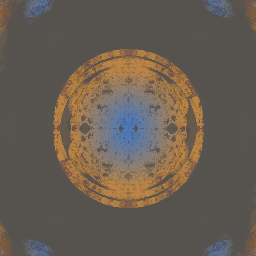
Mandelbox fold-scale 2D projection
fractals_3d_webgl · MandelboxFoldScale
A 2D orthographic projection of Tom Lowe's Mandelbox (2010) escape-time field.
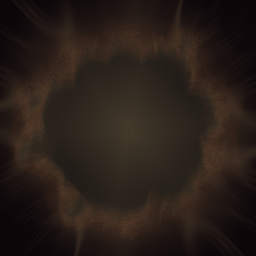
Mandelbulb power-8 2D projection
fractals_3d_webgl · Mandelbulb2DProjection
A 2D orthographic projection of the iconic power-8 Mandelbulb escape-time field.
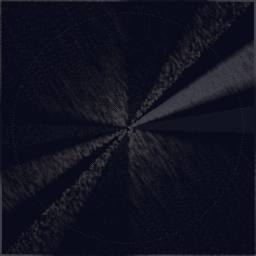
Poincare-disk hyperbolic tiling (Escher / Coxeter)
fractals_3d_webgl · HyperbolicTilingPoincare3D
A 3D hyperboloid-lifted rendering of the (p, q) hyperbolic tessellation in the Poincare disk model.
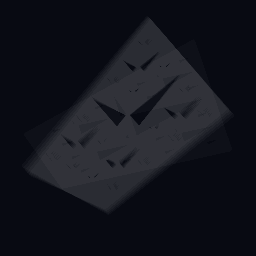
Sierpinski tetrahedron (tetrix) 3D chaos game
fractals_3d_webgl · SierpinskiTetrahedron3D
A 3D chaos-game rendering of the Sierpinski tetrahedron (tetrix): a regular tetrahedron recursively replaced by four half-size copies at its corners (Hausdorff dimension log(4)/log(2) = 2).
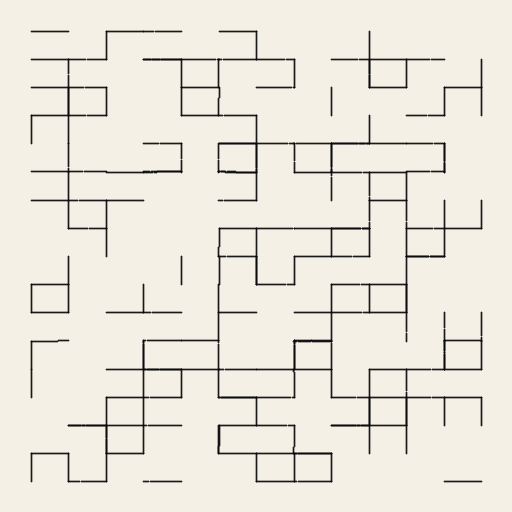
Interruptions (Molnár)
generative_pioneers · molnar_interruptions
Vera Molnár's 1968 'Interruptions' series: a regular grid of rectangle cells where each cell's four border edges are drawn independently, each with its own random probability of being omitted.
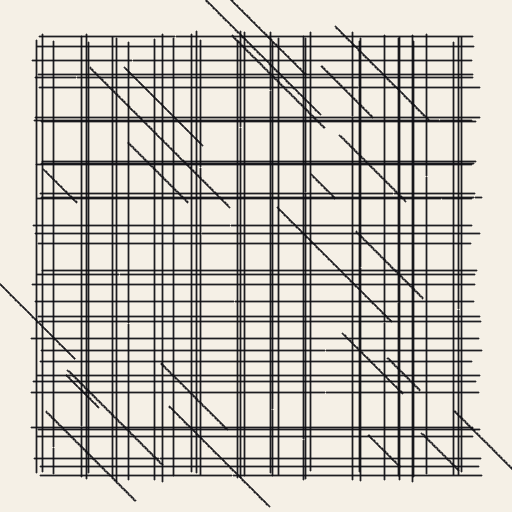
Line Arrangements (Mohr)
generative_pioneers · mohr_line_arrangement
Manfred Mohr's 1969 plotter 'Line Arrangements': a fixed grid of columns and rows, each carrying a small set of nearly-parallel lines whose exact positions are random within the cell, overlaid with a layer of 45° diagonals whose length, position and orientation are independently random.
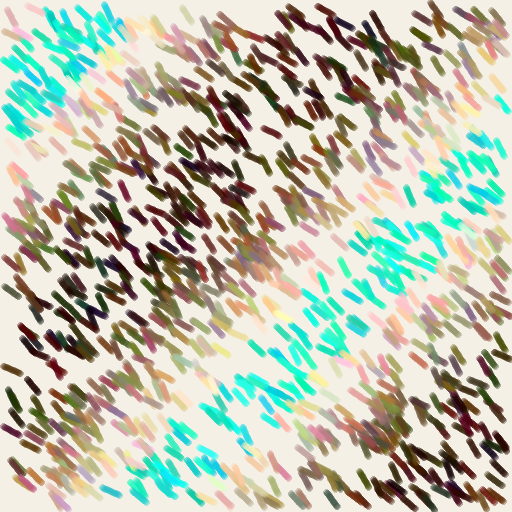
Paint by Numbers (Haeberli)
generative_pioneers · haeberli_painterly
Paul Haeberli's 1990 SIGGRAPH 'Paint by Numbers' — the founding paper of stroke-based rendering.
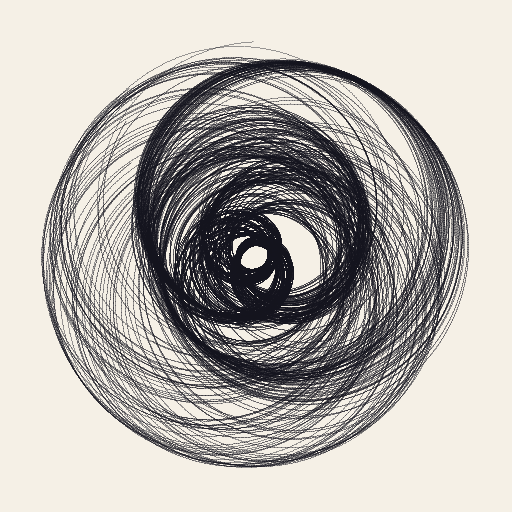
Plotter Trajectories (Hébert)
generative_pioneers · hebert_plotter_trajectory
Jean-Pierre Hébert's plotter-trajectory idiom — parametric Lissajous-like curves drawn over multiple passes, each pass slightly phase-shifted, each segment modulated by the local velocity of the pen so that slow regions lay down heavier pigment and fast regions trace a ghost line.
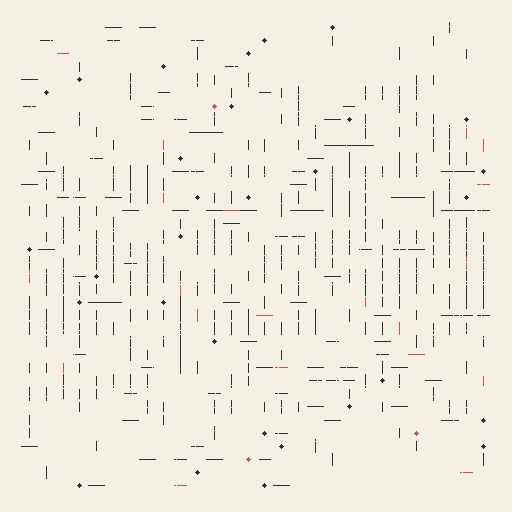
Walk-through-Raster (Nake)
generative_pioneers · nake_walk_sequence
Frieder Nake's 1966 'Walk-through-Raster' program (Algol 60 on a Telefunken TR4, plotted on a ZUSE Graphomat Z64): a repertoire of six signs — empty, vshort, vlong, hshort, hlong, dot — is sampled into a Markov chain whose transition probabilities vary with chain position so that 'vertical strokes are high at the chain's middle, empties dominate at the ends'.
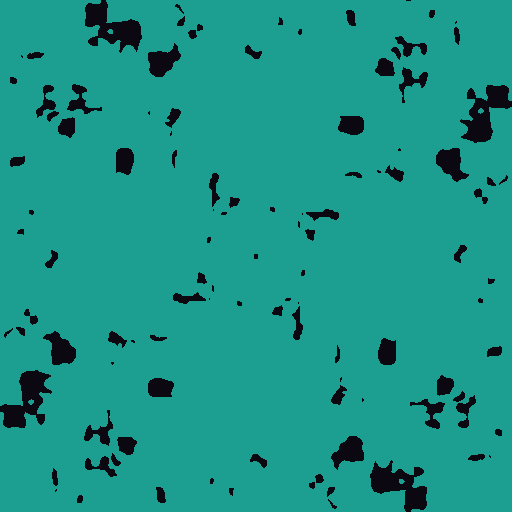
Computer-Aided Painting (Schwartz)
generative_pioneers_2 · lillian_schwartz
Lillian Schwartz, who worked at Bell Labs from 1968 to 2001 with Kenneth C.
Hypertransformations (Molnár)
generative_pioneers_2 · molnar_hypertransformations
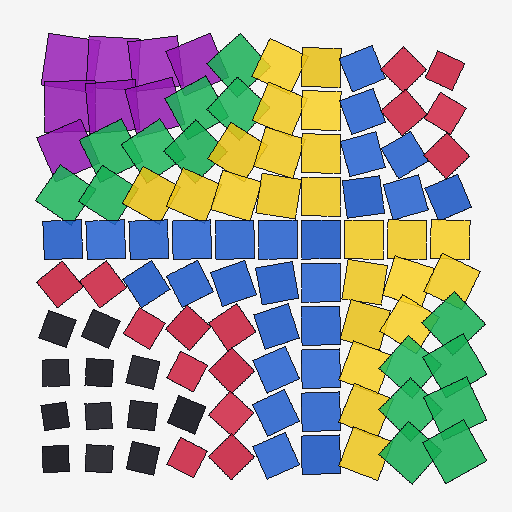
Vera Molnár's 'Hypertransformations' (1974-1976), executed on the IBM 360 with a CRT 2250 display and output on a Benson plotter.
P-159 D (Mohr)
generative_pioneers_2 · mohr_p159d
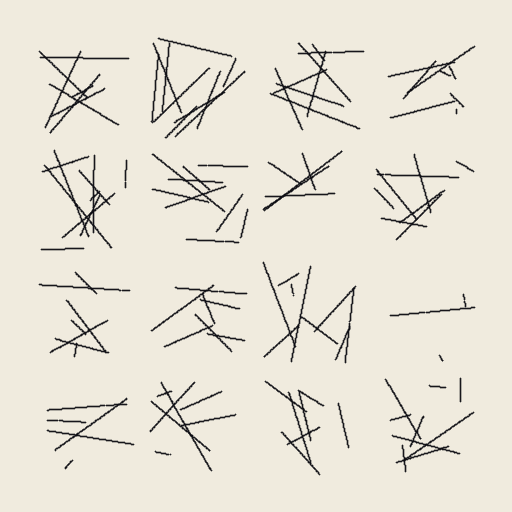
Manfred Mohr's 'P-159 D' (1969, Vincennes) sits in the P-159 family that the artist developed from his earlier P-021 / P-036 line-arrangement programs.
Raster Sequence (Nake)
generative_pioneers_2 · nake_raster_sequence
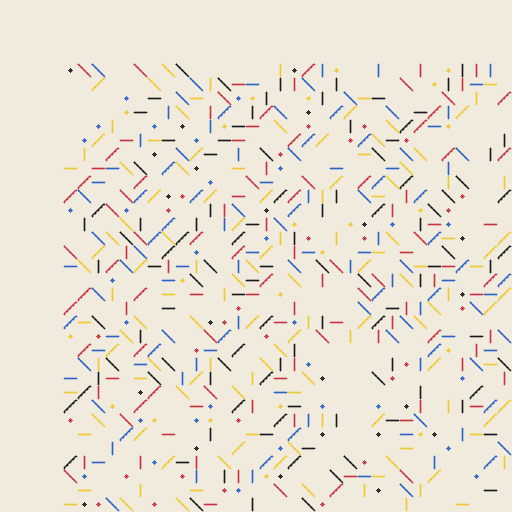
Frieder Nake's 'Walk-through-Raster' / 'Raster Sequence' (1966) is the first non-stationary Markov chain in computer art history.
Structure Computer (Cohen / AARON)
generative_pioneers_2 · cohen_structure_computer
Harold Cohen's AARON, begun at UCSD in 1967-1973 and continuously developed until Cohen's death in 2016, is the longest-running art-making AI in history.
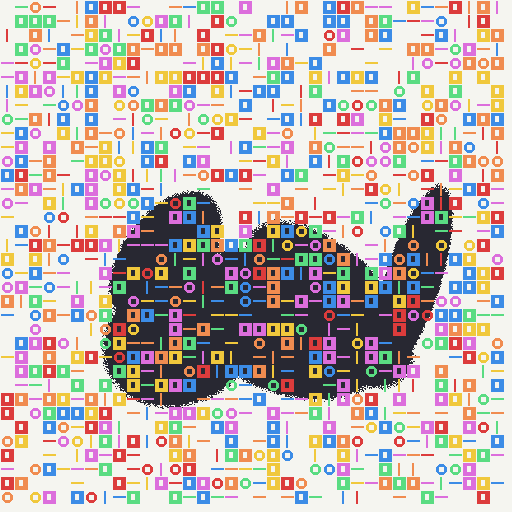
Text Rain (Utterback & Achituv)
generative_pioneers_2 · utterback_text_rain
Camille Utterback and Romy Achituv's 'Text Rain' (1999) is one of the canonical interactive installations of the late-1990s computer-vision era, and the piece that won them a US patent (US 6,928,313) in 2005.
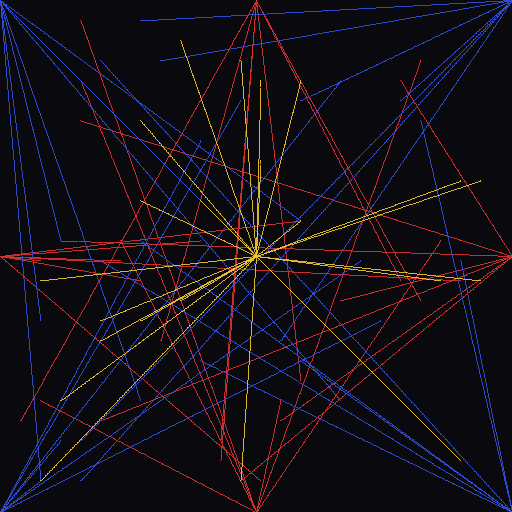
Wall Drawings (LeWitt)
generative_pioneers_2 · sol_lewitt_wall_drawings
Sol LeWitt's wall drawings (1968-2007) are the canonical example of conceptual-art-as-algorithm: the work is the set of written instructions, and any number of draftspeople can execute them with different results that all satisfy the same rule.
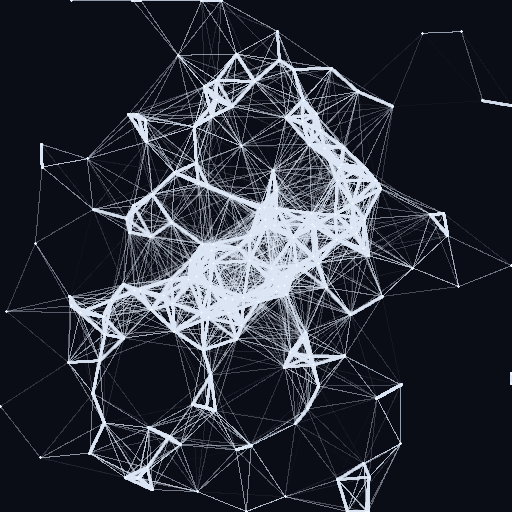
Cherniak Constellations (Dmitri Cherniak point-cloud + graph)
hobbs_cherniak_penne_deep · CherniakConstellations
A pseudo-random point cloud with connecting lines filtered by distance, producing graph-like emergent forms.
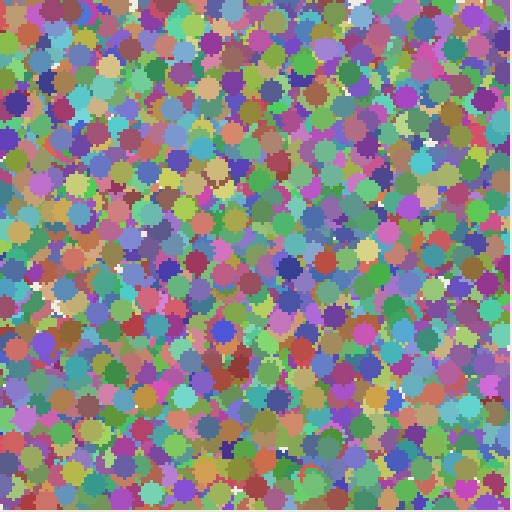
Cherniak Nibbles (Dmitri Cherniak cell-eating cellular automata)
hobbs_cherniak_penne_deep · CherniakNibbles
A cellular-automata growth algorithm in the spirit of Dmitri Cherniak's body of work — small 2D shapes ('nibbles') that grow by selectively removing neighbours.

Hobbs Color-Field Overlay (Tyler Hobbs compositional method)
hobbs_cherniak_penne_deep · HobbsColorFieldOverlay
Hobbs's compositional method of choice: combine TWO independent fields — a Perlin flow field that drives the *trajectory* of a set of line segments, and a Gaussian-blurred colour field that drives the *colour* and *opacity* of those segments.
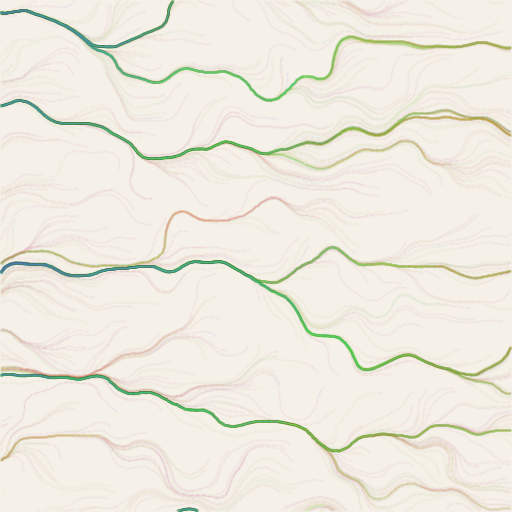
Hobbs QLIQUE (Tyler Hobbs — QQL dense-streamline tangle)
hobbs_cherniak_penne_deep · HobbsQLIQUE
A dense tangle of curves where every curve is a streamline through a Perlin flow field, in the visual spirit of Tyler Hobbs's 2022 QQL release (with Dandelion Mane).

Hobbs Spirograph (Tyler Hobbs — Petal Loops / Elektroanima)
hobbs_cherniak_penne_deep · HobbsSpirograph
A rotating-circular-arc trail in the spirit of Tyler Hobbs's *Petal Loops* (2020) and *Elektroanima* (2020) — works described by Hobbs as 'looping taken to an excessive level.' M rotating points (default 8) are connected by a closed polyline that morphs each frame as the whole ring rotates by a small angle around a central anchor.
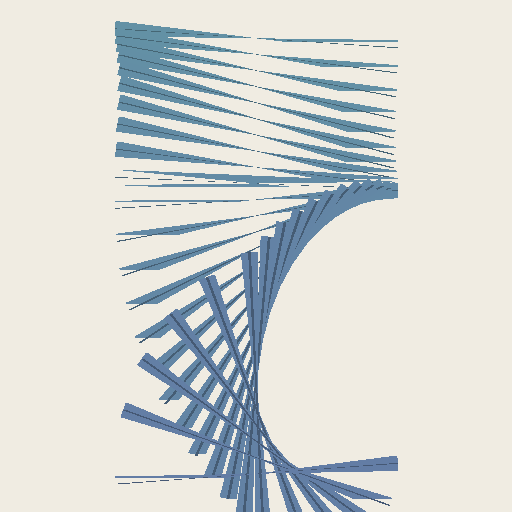
Penne Imprecise Balance (Aaron Penne stacked-blocks column)
hobbs_cherniak_penne_deep · PenneImpreciseBalance
A column of stacked rectangular blocks where each block is rotated by a seed-derived angle.
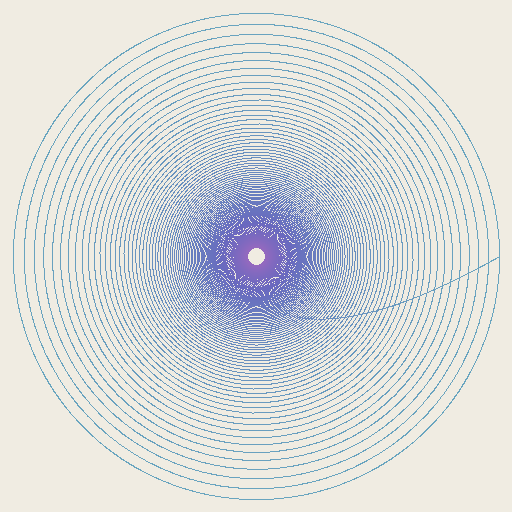
Penne Ringers (Aaron Penne concentric ring extrusion)
hobbs_cherniak_penne_deep · PenneRingers
Penne's take on the *Ringers* idiom (best known from Cherniak's Art Blocks release, 2021): concentric rings extruded along the Z axis, rotated about a common axis, projected to 2D.
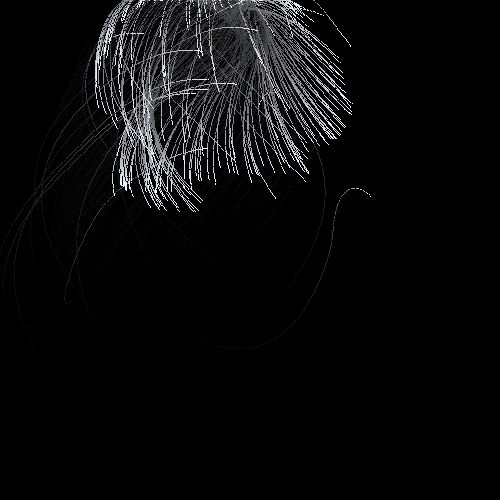
Boids Flock (Hodgin Murmuration)
hodgin_iquilezles · BoidsFlock
A 2D flock of boids steered by Craig Reynolds' three classic rules (separation, alignment, cohesion) over a coarse spatial-hash neighbor query.
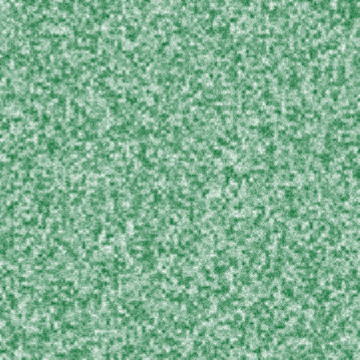
Fractional Brownian Motion noise
hodgin_iquilezles · FBMNoise
Quilez's canonical fBM: a 2D value-noise base summed over N octaves whose frequency doubles and amplitude is multiplied by G = exp2(-H) per octave.
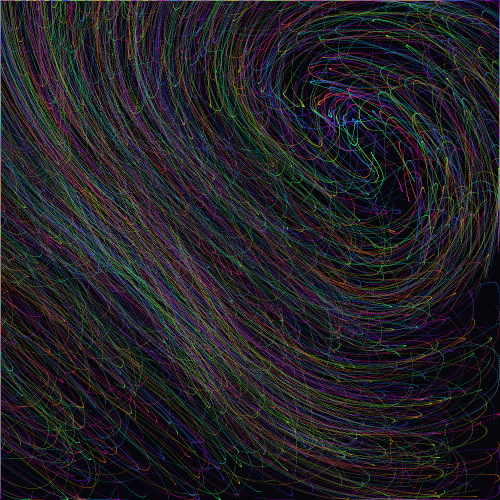
Magneto Particles (Hodgin Magnetosphere)
hodgin_iquilezles · MagnetoParticles
Particles pulled and pushed by N orbiting magnetic anchors whose charges flip sign over time.
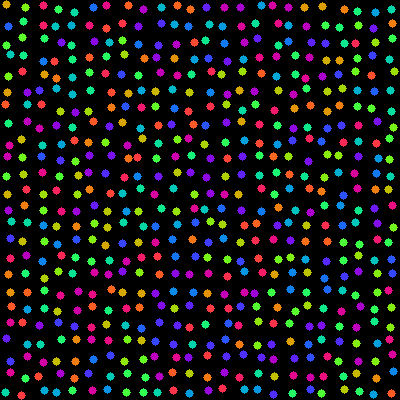
Mulberry32 PRNG (stratified scatter)
hodgin_iquilezles · Mulberry32RNG
Mulberry32 is a tiny 32-bit-state pseudo-random number generator popularised in the demoscene and used pervasively by Quilez and other graphics programmers as the RNG inside procedural sketches.
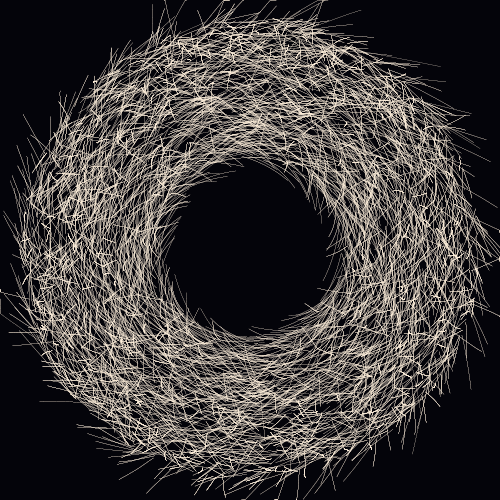
Saturn Rings (orbital resonance)
hodgin_iquilezles · SaturnRings
Thousands of particles are initialized in an annulus between inner_radius and outer_radius around a central mass, with circular orbital velocities v = sqrt(M/r).
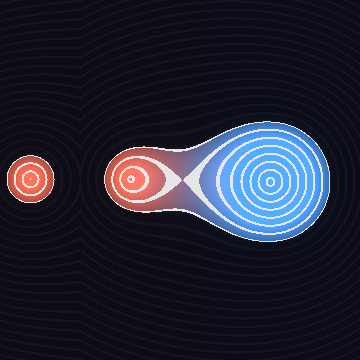
Smooth-Minimum SDF field
hodgin_iquilezles · SmoothMinSDF
Two animated 2D SDF primitives (a moving circle and a translating slab) are blended with Quilez's quadratic-polynomial smooth-minimum and rendered as a scalar field.
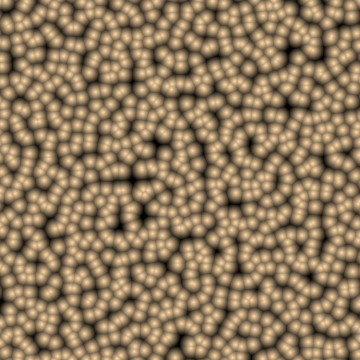
Worley / Cellular Noise
hodgin_iquilezles · WorleyNoise
Quilez's classic 2D Worley noise: a unit grid of cells, each containing one pseudo-random feature point placed by a 2D integer hash.
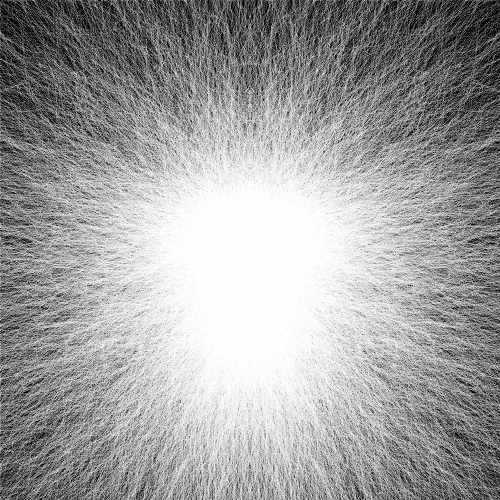
Binary Ring
particles_paths · binaryRing
A system of path tracing particles evolves continually from an initial creation.
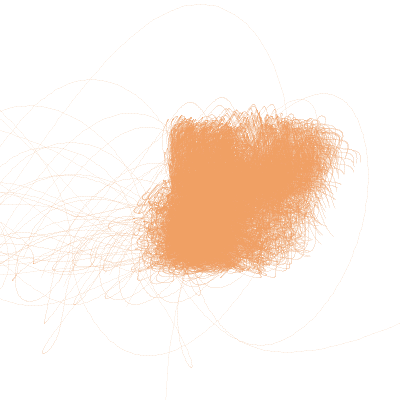
Bit 10001
networks_fractals · bit10001
(no description available) — Bit 10001 is a 3D particle system of 10,001 mutually-interacting points rendered to 2D via a rotating perspective camera.
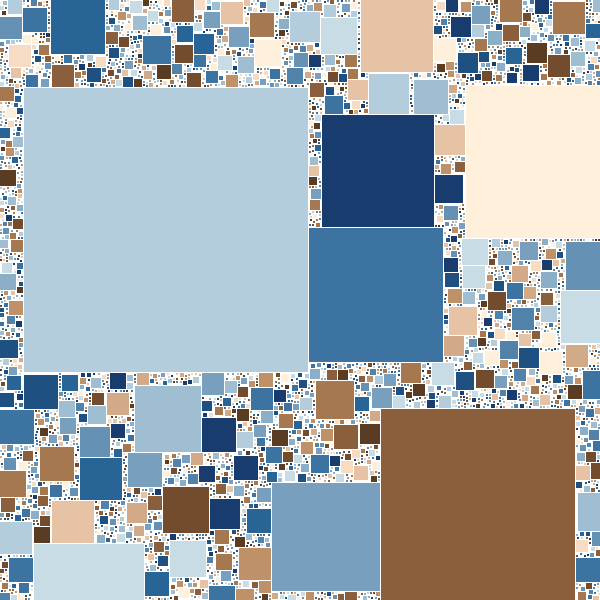
Box Fitting
growth_aggregation · boxFitting
Box Fitting (source code)
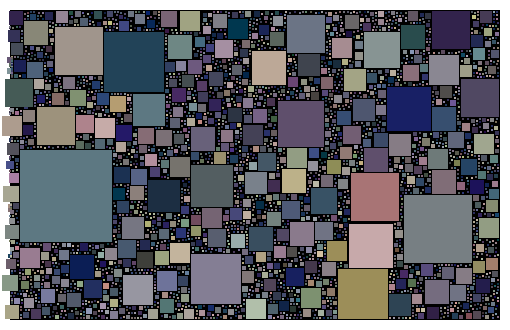
Box Fitting Img
growth_aggregation · boxFittingImg
The classic box fitting algorithm (see Box Fitting) modified with an image substrate, allowing new boxes to draw color from an invisible background.
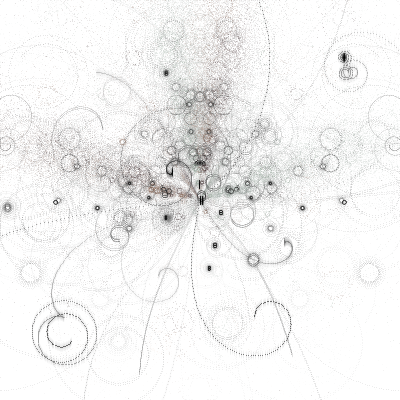
Bubble Chamber
physics_chamber · bubblechamber
The Bubble Chamber is a generative painting system of imaginary colliding particles.
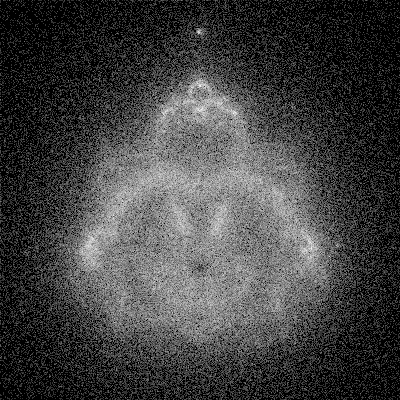
Buddhabrot
networks_fractals · buddhabrot
(no description available) — Buddhabrot is the rendering of escape-time trajectories of the Mandelbrot iteration.
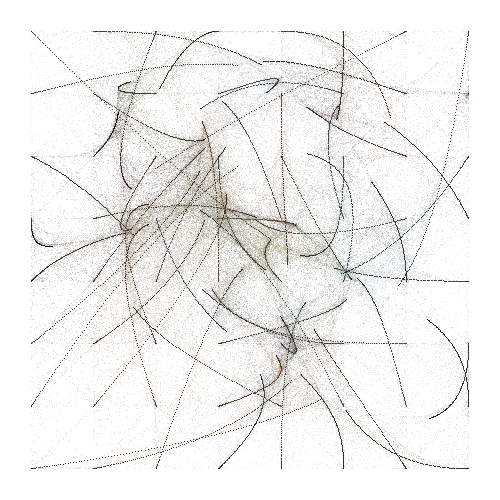
City Traveler (variation A)
physics_chamber · citytraveler
City Traveler — a field of cities laid out on a grid, connected by thousands of travellers moving between random nearby pairs along sin-arc paths.
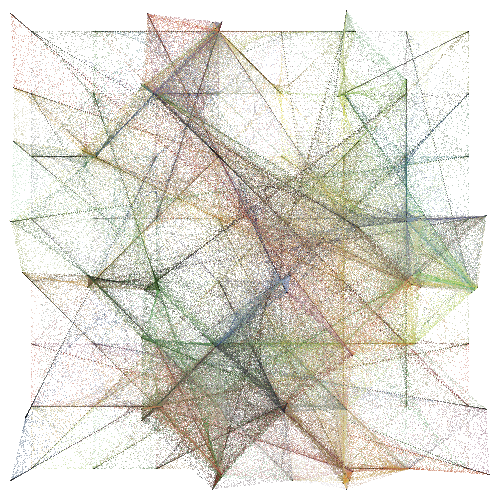
Cubic Attractor
strange_attractors · cubicAttractor
Despite the name, Cubic Attractor is not an iterated map but a particle system: a num*num grid of 'cities' (8*8 in the medium variant) each pulling toward a random grid-cell destination with friction.
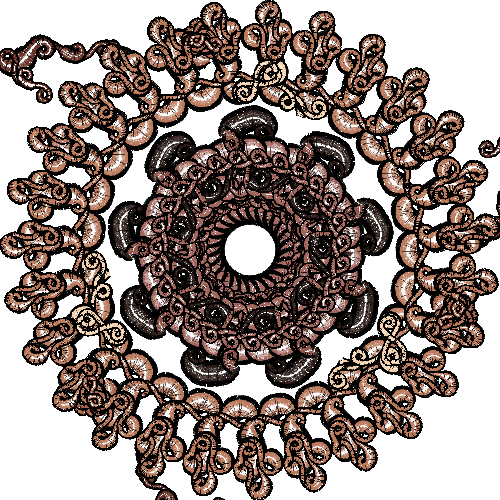
Guts (crossing knot)
growth_aggregation · guts
Guts (crossing knot)
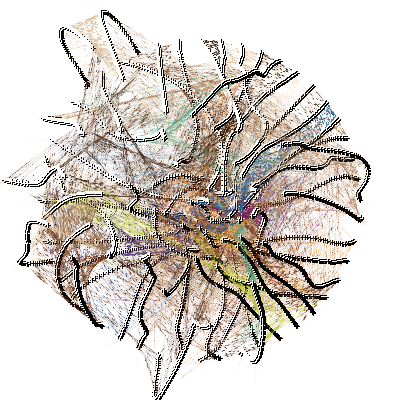
Happy Place
networks_fractals · happyPlace
Happy Place renders the resulting configuration of a system of nodes connected together at random.
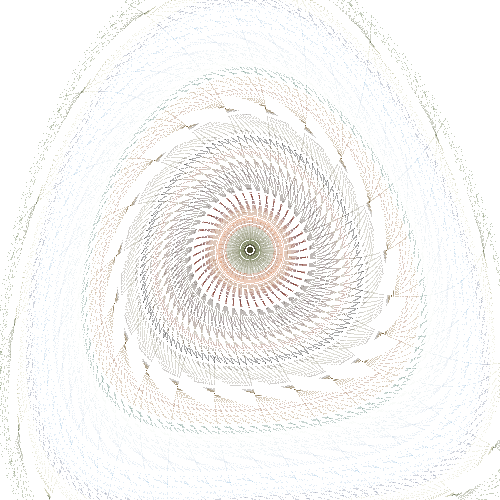
Henon Phase
strange_attractors · henonPhase
In computing time scales, the Henon Phase is an ancient strange attractor.
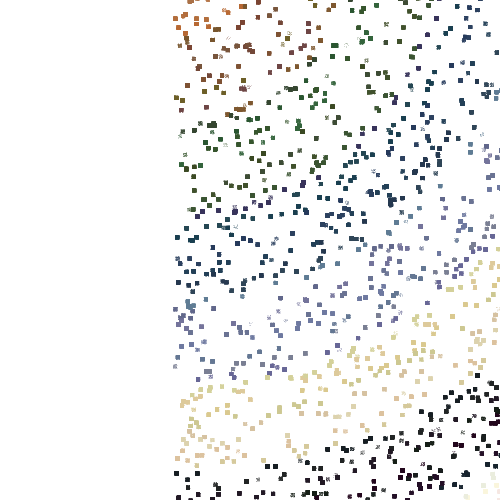
Henon Phase Deep
strange_attractors · henonPhaseDeep
A larger, more atmospheric cousin of the Henon Phase attractor: 4000 colored travelers iterate the rotated Henon quadratic on a 1000x1000 canvas with a 64-color palette (synthesised in lieu of the original 'garner' GIF palette), per-step position fuzz of ~0.004, and random mutations (rebirths) every frame.
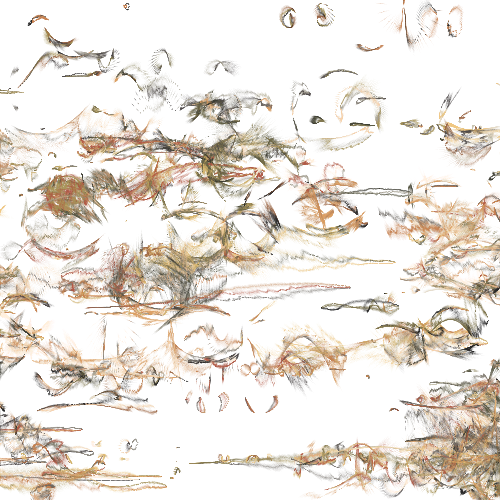
Intersection Aggregate
growth_aggregation · interAggregate
The Intersection Aggregate is a fun visualization defining the relationships between objects with Casey Reas, William Ngan, and Robert Hodgin.
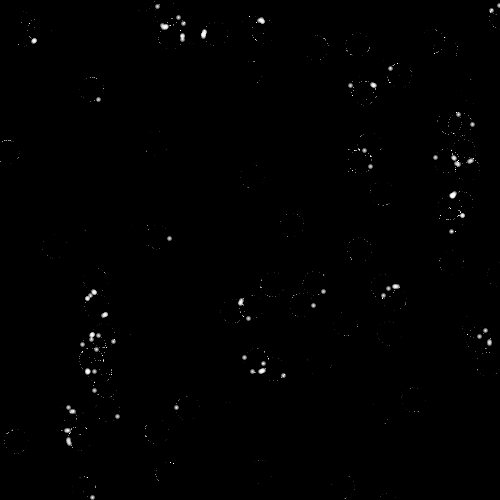
Intersection Momentary
growth_aggregation · interMomentary
The Intersection Momentary is a fun visualization defining the relationships between objects with Casey Reas , William Ngan , and Robert Hodgin .
Limb Sand Stroke
particles_paths · limbsandstroke
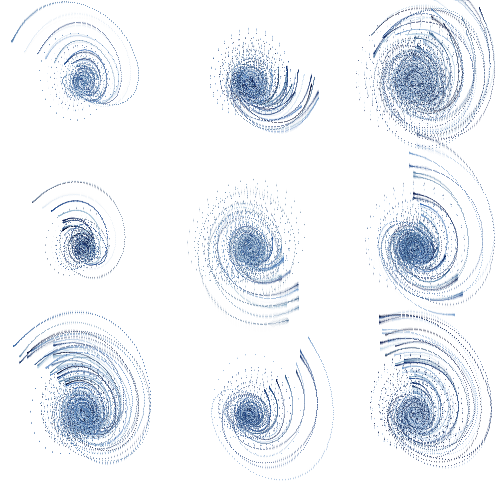
The Limb Sand Stroke combines two of Tarbell's signature techniques — recursive radial Limb Stroke limbs and sinusoidal Sand Stroke fans — into a single hybrid.
Limb Strat
particles_paths · limbstrat
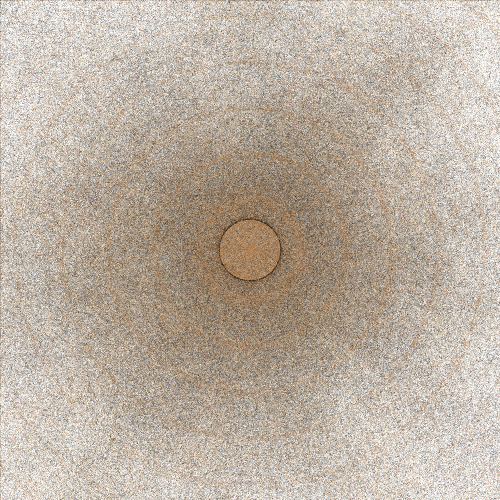
The Limb Strat grows a forest of recursive 'stratigraphic' limbs.
Limb Stroke
particles_paths · limbStroke
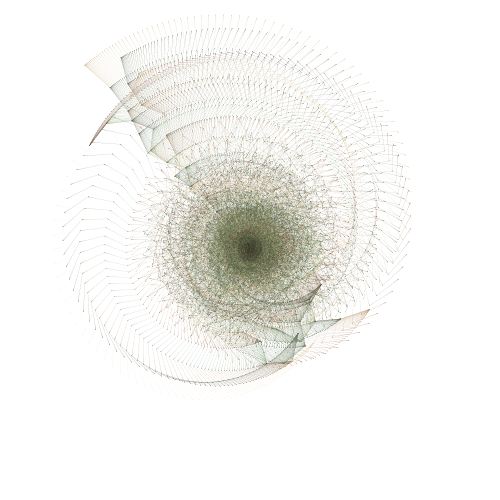
Limb Stroke builds a recursive tree of radial limbs whose endpoints deposit coloured pixel arcs along their radius each frame, painting tarbell's iconic wiggling, layered limb structures.
Node Garden
networks_fractals · nodeGarden
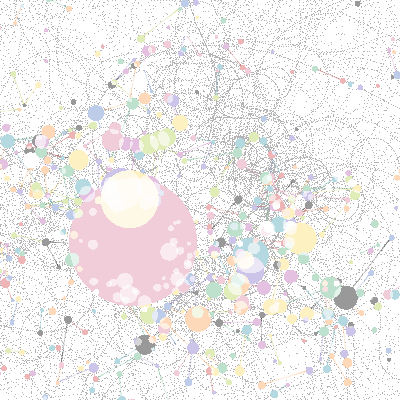
Nodes are instantiated on irregular curving lines.
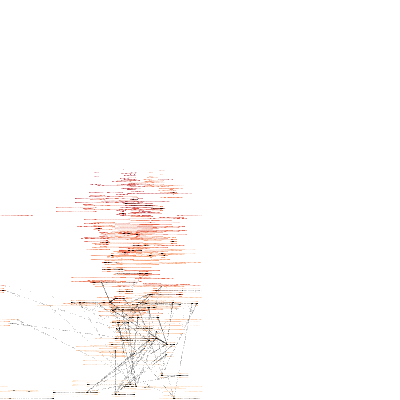
Offspring
networks_fractals · offspring
(no description available) — Offspring is a robot colony in which Bits are born, mature, mate, age and die.
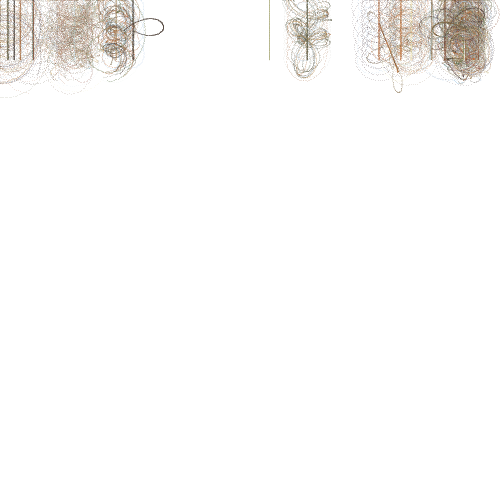
Orbitals
physics_chamber · orbitals
Orbitals — nested orbital trajectories.
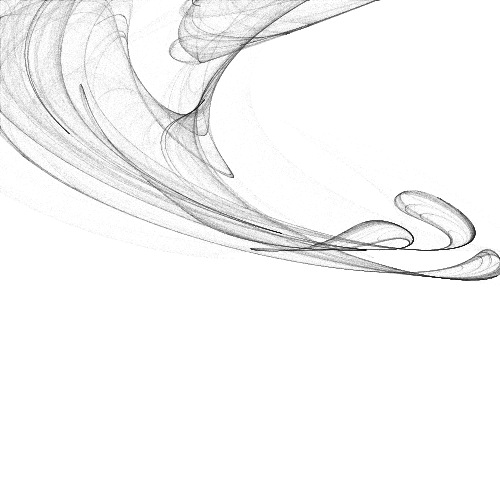
Peter de Jong Attractor
strange_attractors · peterdejong
Peter de Jong attractors — a family of iterated-function systems on the plane parameterised by four 'Bourke' constants a, b, c, d.
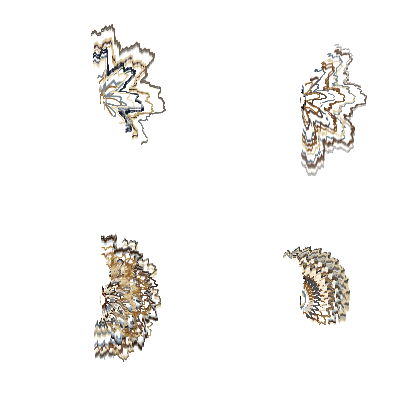
Sand Dollar
particles_paths · sandDollar
The Sand Dollar is an iteratively constructed radial form using the Sand Stroke painting technique.
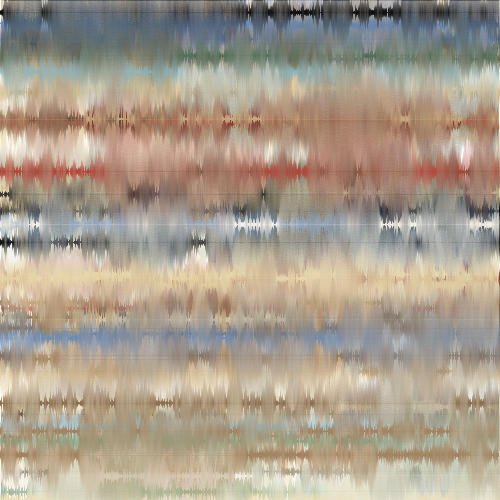
Sand Stroke
particles_paths · sandstroke
The Sand Stroke is applied here in it's most basic form.
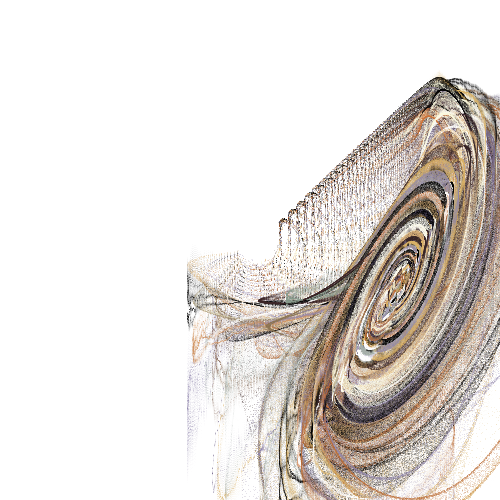
Sand Traveler
particles_paths · sandTraveler
The Sand Traveler is a rendering of 1,000 traveling particles, each in pursuit of another.
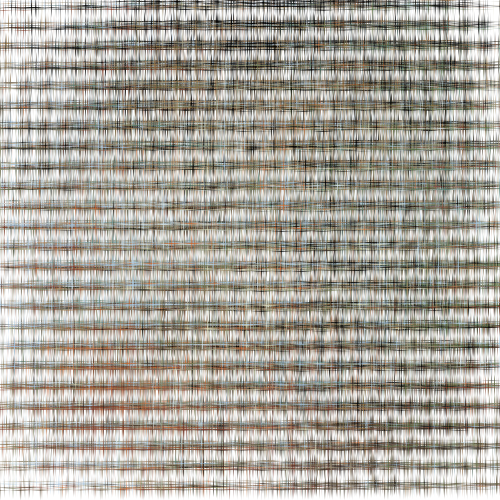
Stitches
particles_paths · stitches
Stitches is an exploration of cross-stitch embroidery using many bits of wandering colored thread on an even fabric grid.
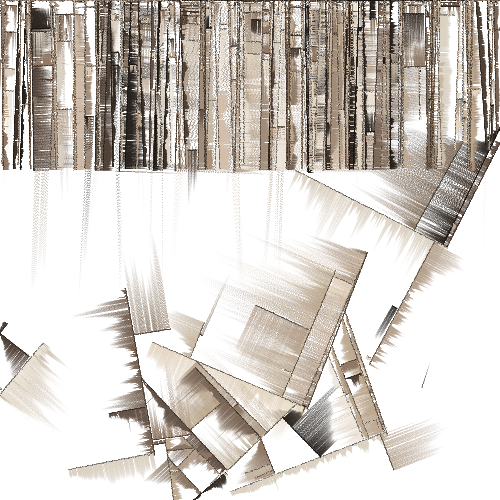
Substrate Watercolor
growth_aggregation · substrate
Lines likes crystals grow on a computational substrate.
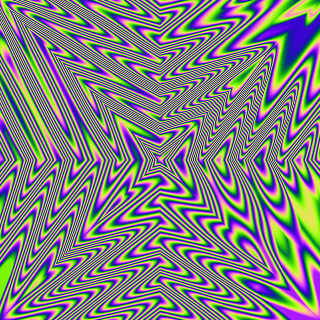
Hydra Video Synth (numpy port of Olivia Jack's Hydra)
live_coding_synth · HydraVisualSynth
A pure-numpy port of the core Hydra video-synth API: chains of sources (osc, noise, shape, gradient, solid, voronoi) composed with geometry modifiers (rotate, scale, scroll, kaleid, pixelate, repeat) and color/blend modifiers (invert, posterize, thresh, color, brightness, contrast, luma, saturate, hue, add, diff, mult, blend) — including the signature modulate operator a.modulate(b, scale), which uses b's red and green channels to displace a's x and y coordinates (with modulateRotate, modulateScale, modulatePixelate, modulateKaleid variants).
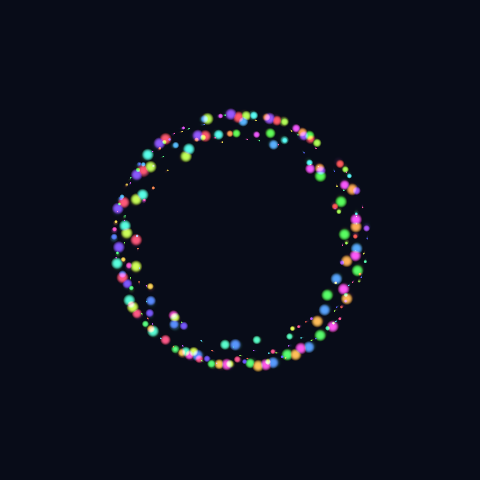
P5Live sin/cos Spirograph Sketch
live_coding_synth · P5LiveSketch
A pure-numpy port of the canonical p5.js sin/cos live-coding sketch: a spirograph-like cloud of points whose polar coordinates are themselves nested sin/cos chains.
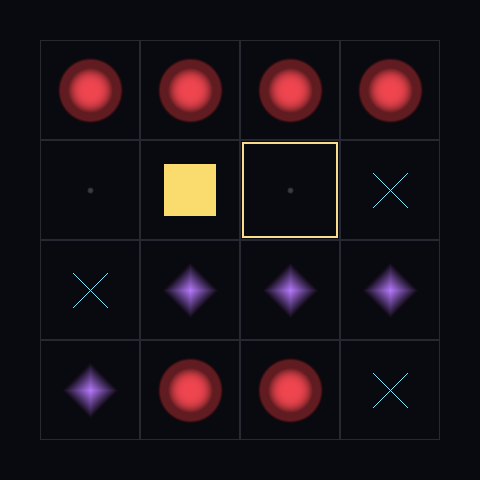
Strudel 16-Step Pattern Visualiser (4x4 grid of sample-typed shapes)
live_coding_synth · StrudelVisualizer
A pure-numpy port of Strudel's signature 4×4 (16-step) pattern grid.
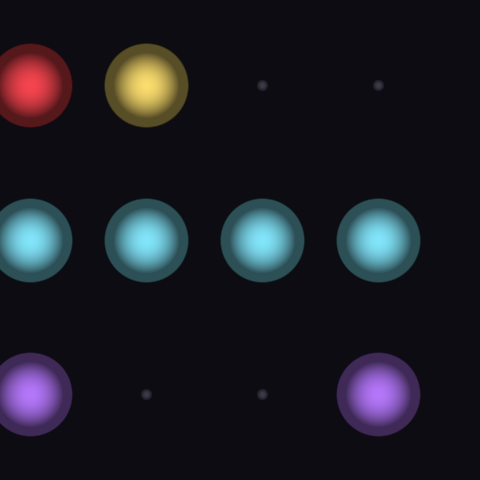
TidalCycles Mini-Notation Pattern Visualiser
live_coding_synth · TidalCyclesPattern
A pure-numpy port of TidalCycles' rhythm mini-notation, expanded per cycle into a row of (sample, variant) tuples and visualised as a row of pulsing shapes that scroll horizontally.
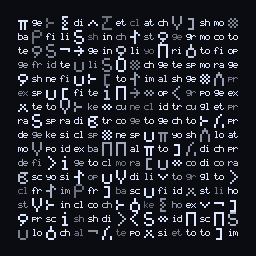
Topolectures (Olivia Jack) — 2D cell grid + text snippets + audio-amplitude pulse
live_coding_synth · TopolecturesOliviaJack
A pure-numpy port of Olivia Jack's Topolectures: a 2D grid of cells, each cell holding a 1–2 character text snippet from a topology-mathematics corpus (sheaf, locale, frame, open, closed, cover, limit, point, net, filter, basis, ideal, prime, ring, mod, field, topos, yoneda, etale, sieve, …) and brightness pulsed by a synthetic audio-amplitude signal.
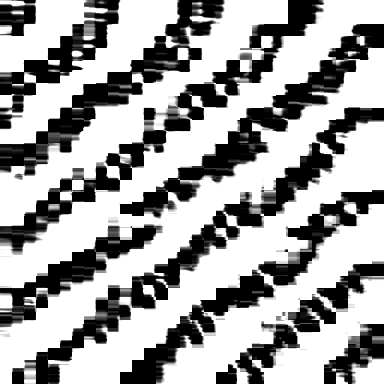
DeepDream Field (Mike Tyka — AI: DeepDream / Inceptionism)
ml_artists · TykaDeepDreamField
Inspired by Mike Tyka's AI: DeepDream series (2015-) and his co-authorship of 'Inceptionism: Going Deeper into Neural Networks' with Mordvintsev and Olah.
GAN Watercolor (Helena Sarin — Neural Bricolage / #latentDoodles)
ml_artists · SarinWatercolor
Inspired by Helena Sarin's Neural Bricolage practice (#latentDoodles, GAN Weaver, The Book of veGAN): she trains GANs on her own watercolor paintings and sketches, then curates the output back into analog paintings.
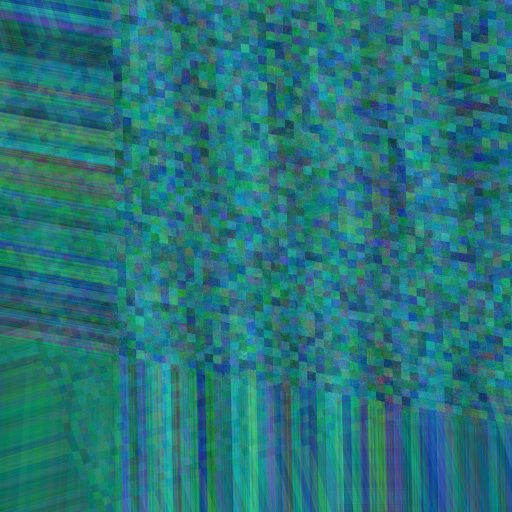
Glitch (Mario Klingemann — glitch-print aesthetic)
ml_artists · KlingemannGlitch
Klingemann's practice amplifies the visible failure modes of digital pipelines — distorted faces mid-decode, colour-shifted artefacts, rectangular datamosh tears — into the subject matter itself.
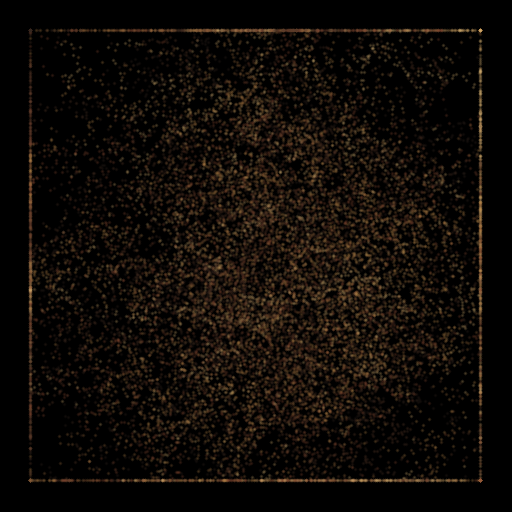
Memories of Passersby (Mario Klingemann — Memories of Passersby I)
ml_artists · KlingemannMemorex
Inspired by Mario Klingemann's Memories of Passersby I (2018, Sotheby's) — a custom GAN trained on 17th–19th-century portraits that runs forever, never repeats an output, and 'observes itself' in a feedback loop.
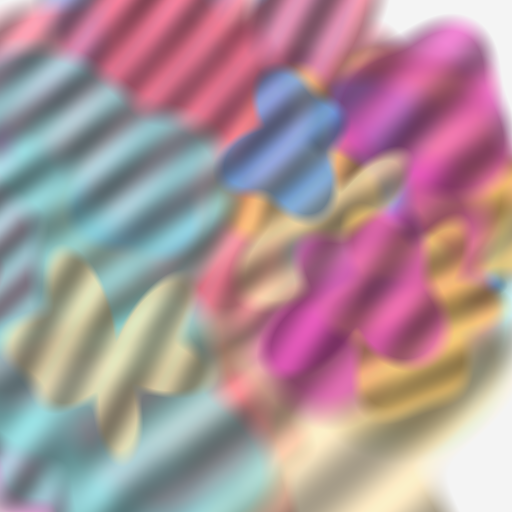
Neural Biodiversity (Sofia Crespo — Neural Zoo / Artificial Natural History)
ml_artists · CrespoNeuralBiodiversity
Inspired by Sofia Crespo's Neural Zoo (2018-), Artificial Natural History (2019-), and Beneath the Neural Waves (2021): she uses 3D GANs, CNN-based texture synthesis and 3D style transfer to fabricate a 'natural history book that never was' — chimerical creatures whose anatomies recombine fragments of real species.
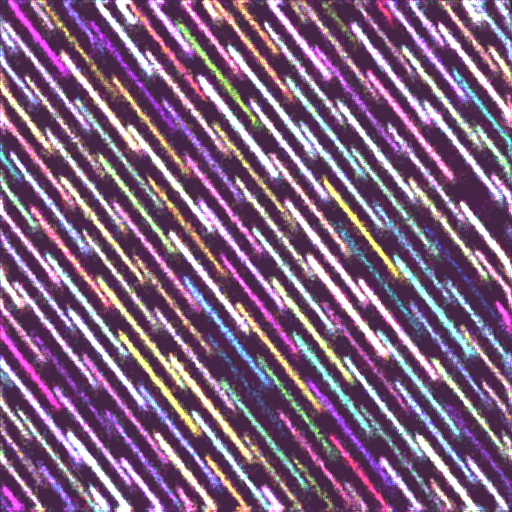
Style Transfer Field (Gene Kogan — ml4a)
ml_artists · KoganStyleTransferField
Inspired by Gene Kogan's Experiments with Style Transfer and the ml4a curriculum: neural style transfer iteratively updates an image so its Gram-matrix feature statistics match a style reference — the gradient of the style loss with respect to pixels defines a vector field.
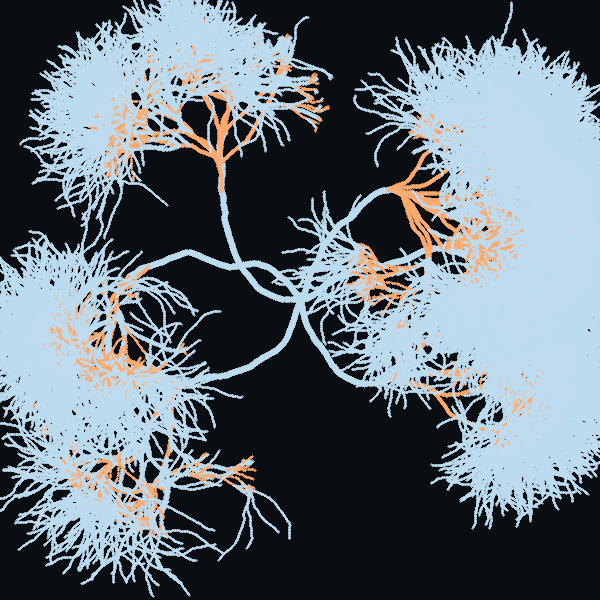
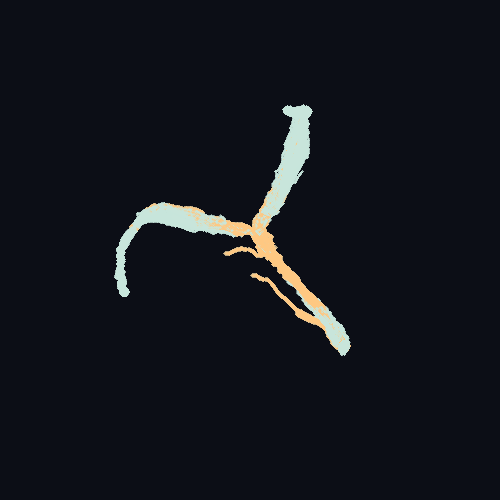
Floraform Growth
nervous_system_hansmeyer · FloraformGrowth
A 2D port of Nervous System's Floraform generative jewelry system.
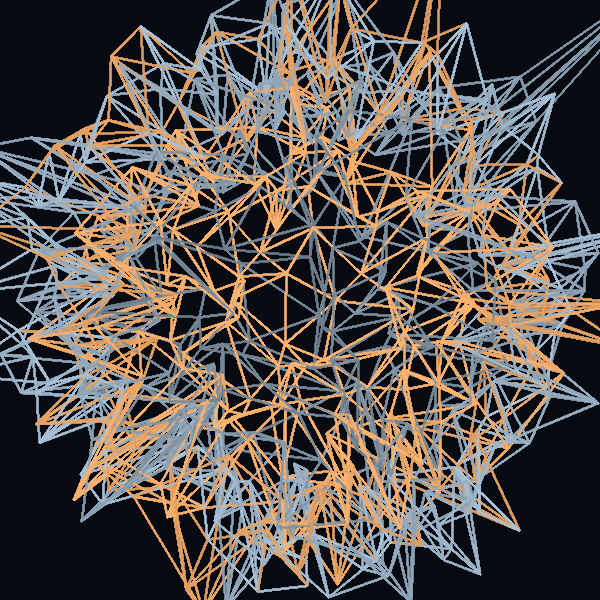
Hyphae Network
nervous_system_hansmeyer · HyphaeNetwork
A 2D port of Nervous System's Hyphae generative jewelry.
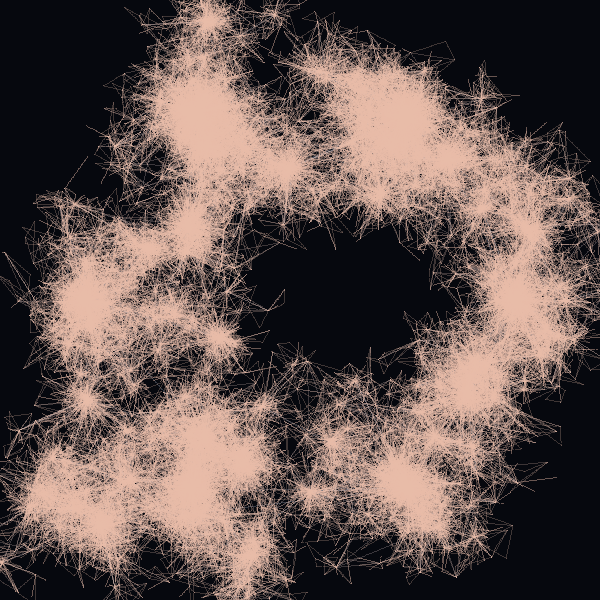
Radiolarian Lattice
nervous_system_hansmeyer · RadiolarianLattice
Nervous System's Radiolaria series translates Ernst Haeckel's 19th-century radiolarian drawings into 3D-printed sculpture.
Subdivided Columns
nervous_system_hansmeyer · HansmeyerSubdivision
Michael Hansmeyer's 2014 'Subdivided Columns' is a computational-design exercise in baroque complexity from algorithmic simplicity: start with a regular polygon, subdivide each edge, perturb each new vertex by a small random offset, repeat.
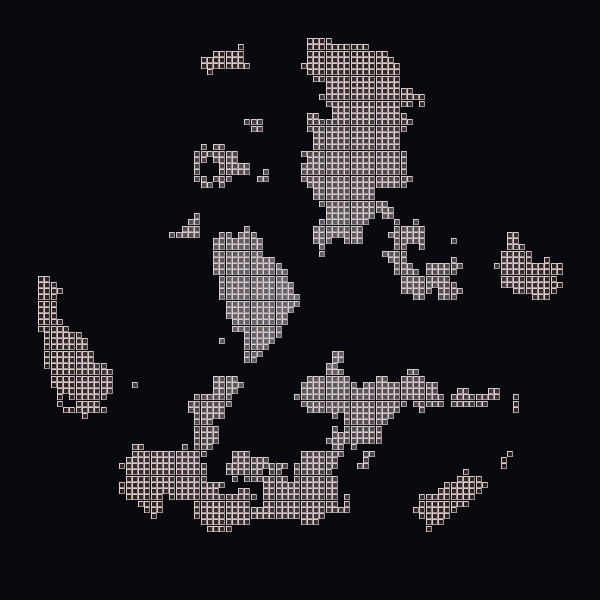
Voxel Field Cross-Section
nervous_system_hansmeyer · DillenburgerVoxelField
Benjamin Dillenburger's voxel-printing research (Digital Building Technologies, ETH Zurich, ~2016) replaced the smooth isosurface extraction of conventional architectural geometry with a literal 3D voxel grid: every cell is either solid or empty, and the boundary of the field is what gets fabricated.
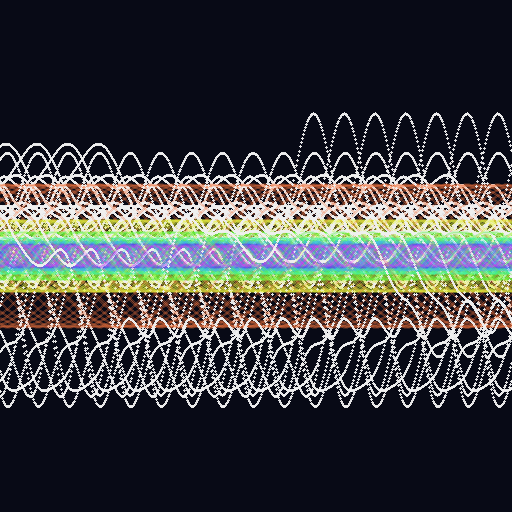
Additive Synthesis Waveform Visualisation
openprocessing_p5js · SoundWaveform
Visualisation of additive synthesis: y(t) = A * sum_{i=0..N-1} a_i * sin(2π f_i t + phi_i).
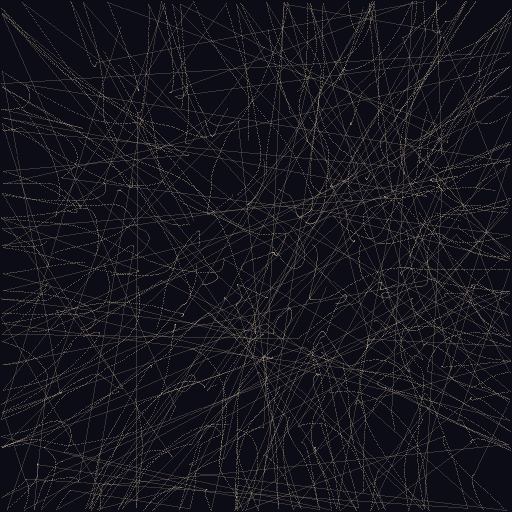
Inverse-distance Attractor Network
openprocessing_p5js · AttractorNetwork
A population of point-agents, each carrying a position and a velocity, mutually attracted by an inverse-distance force F = G / max(d, d_min)^alpha along the displacement vector.
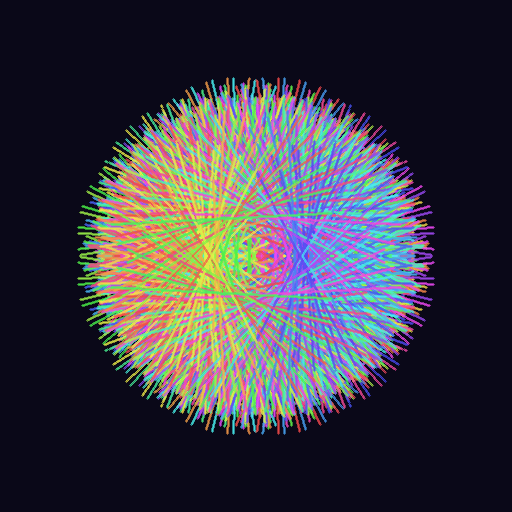
Kaleidoscope Mirror Mandala
openprocessing_p5js · KaleidoscopeMirror
Draws a single wandering line and reflects it across N rotational mirrors around the canvas centre.
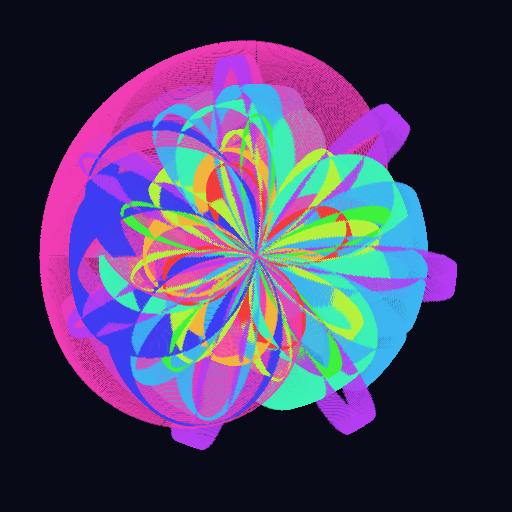
Mathematical Rose (Rhodonea) Patterns
openprocessing_p5js · PolarCurves
Overlay of multiple rose (rhodonea) curves in the canonical polar form r = a * cos((n/d) * theta + phase), parametrised by the rational multiplier k = n/d.
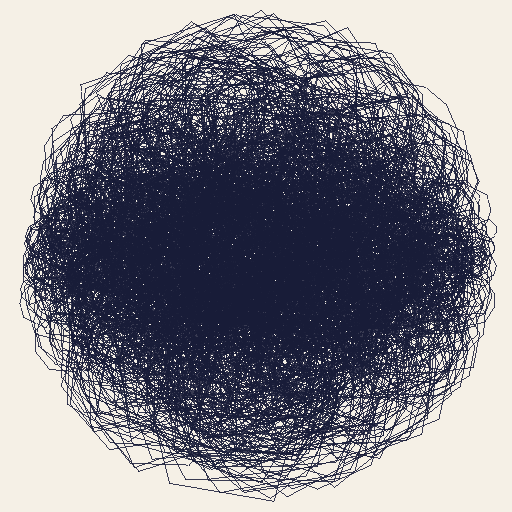
Poincaré Disk Hyperbolic Tessellation
openprocessing_p5js · HyperbolicTiling
Escher-style regular hyperbolic tessellation in the Poincaré disk.
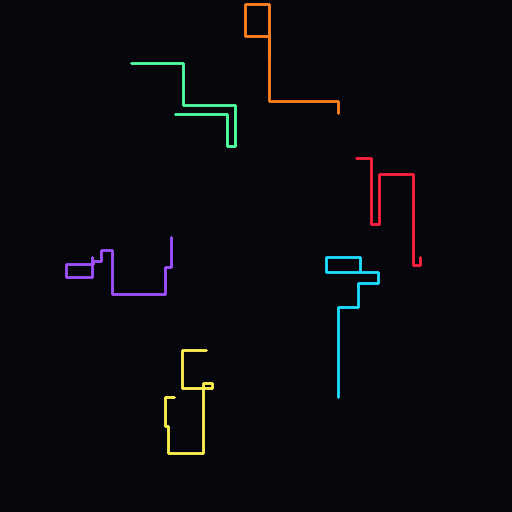
Tron Lightcycle Trails
openprocessing_p5js · TronLightcycle
Tron-style lightcycle trails.
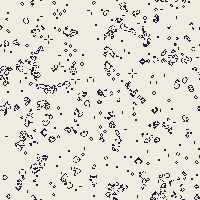
2-D Totalistic Cellular Automaton (Conway + variants)
reas_processing · wolframCA2D
Each cell looks at its 8 Moore neighbors and applies a totalistic rule.
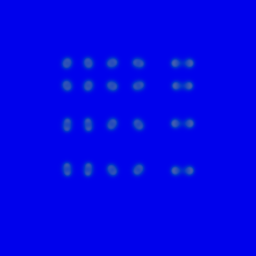
Gray-Scott Reaction-Diffusion
reas_processing · grayScottRD
Two scalar species U and V diffuse on a square grid with rates Du and Dv and react with feed F and kill k.
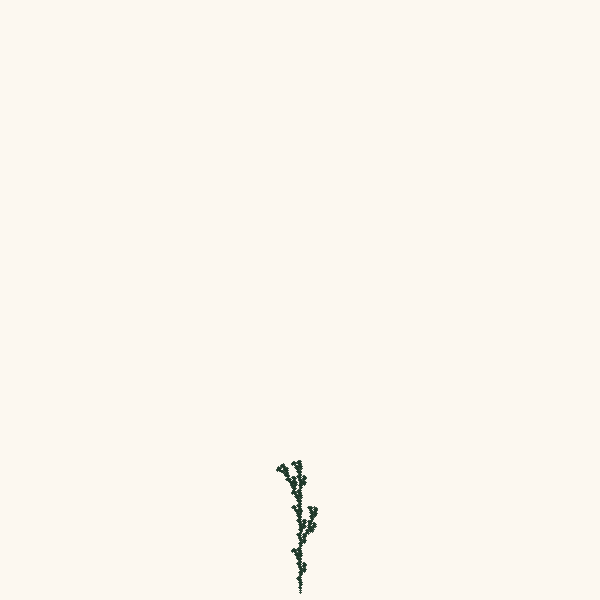
Lindenmayer L-system + Turtle Rendering
reas_processing · lindenmayer
An axiom string is rewritten by parallel production rules for a fixed number of iterations, then interpreted by a 2-D turtle: 'F' walks forward, '+/-' turn left/right, '['/']' push/pop state.
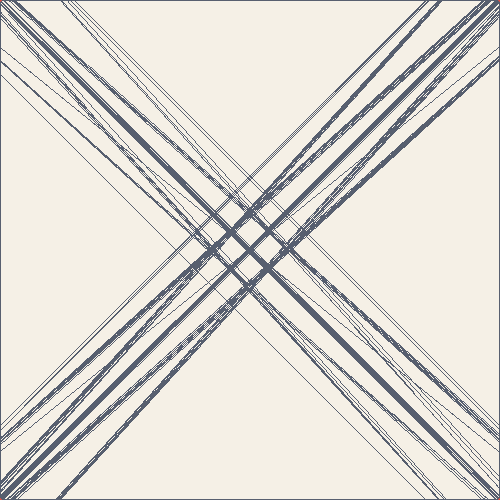
Particle-Spring Cloth (Verlet + Hooke)
reas_processing · particleSpring
A rectangular grid of free particles is connected by Hooke's-law springs at rest length 'spacing'.
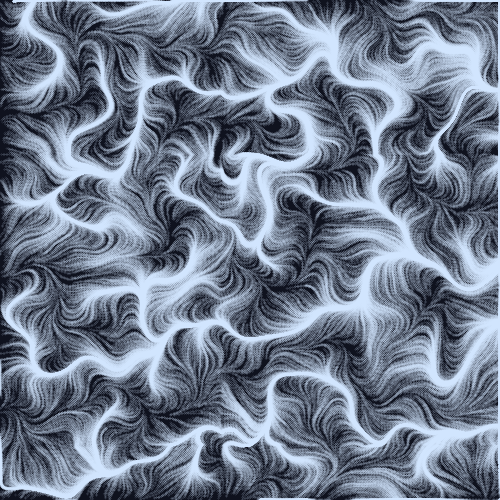
Perlin Streamlines
reas_processing · perlinStreamlines
A 2-D vector field is sampled from one or more octaves of Perlin gradient noise.
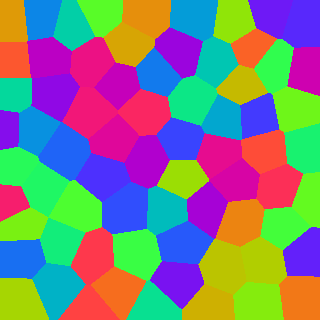
Voronoi Diagram from Random Seeds
reas_processing · voronoi
Every pixel on the canvas is colored with the palette color of the seed point closest to it.
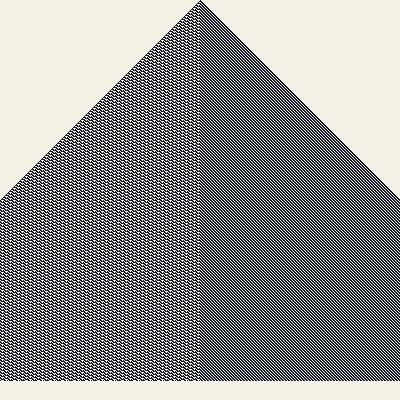
Wolfram Elementary 1-D Cellular Automaton
reas_processing · wolframCA1D
Each row of the canvas is one generation of a Wolfram elementary cellular automaton.
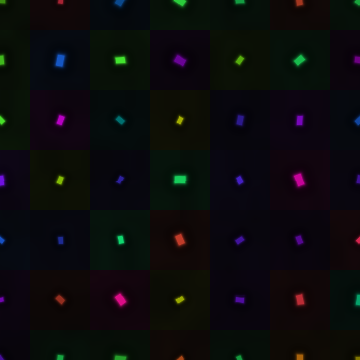
Domain Repetition — Inigo Quilez tile-with-warp
shader_legends · IQDomainRepetition
Inigo Quilez's 'Domain Repetition' technique from his 2008 article.
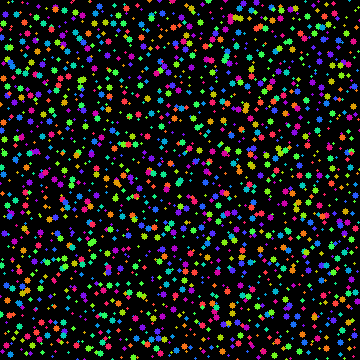
Hash without Sine — Dave Hoskins hash art
shader_legends · TaterHashArt
Dave Hoskins's celebrated 'Hash without Sine' family of cross-platform-stable pseudo-random hash functions, presented as art.
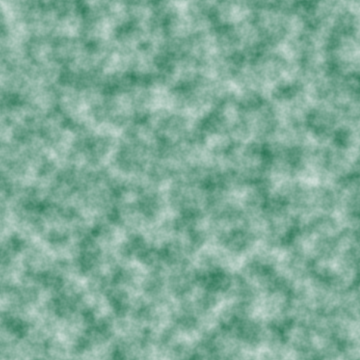
Improved Noise — Ken Perlin (SIGGRAPH 2002, faithful reimplementation)
shader_legends · KenPerlinNoisePure
Ken Perlin's Improved Noise (SIGGRAPH 2002) ported faithfully to numpy.
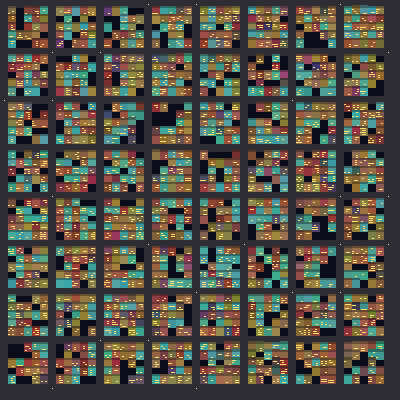
Pixel City — top-down procedural city
shader_legends · PolygoncityPixelCity
A top-down 50x50 procedural city built from a deterministic hash of grid cells.
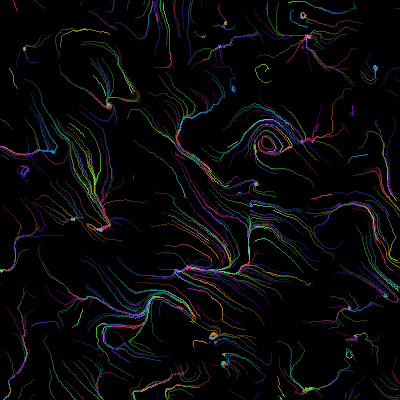
Shane Flow Field — particles in an fBM flow
shader_legends · ShaneFlowFieldFBM
Inspired by Shane's Noisey Image Flow Lines (Shadertoy 7sSSzw).
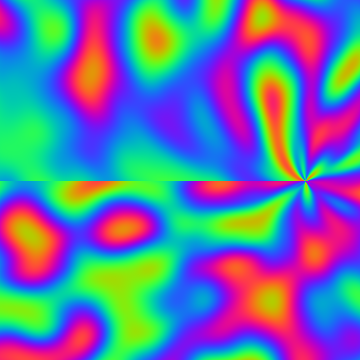
Shane Organic Noise — layered Perlin with rotation and twist
shader_legends · ShaneOrganicNoise
Shane Olsson's 'organic noise' Shadertoy technique: a base Perlin-style gradient noise is sampled in multiple octaves, with each successive layer rotated by an angle proportional to the layer index and twisted by sinusoidal warping about the canvas centre.
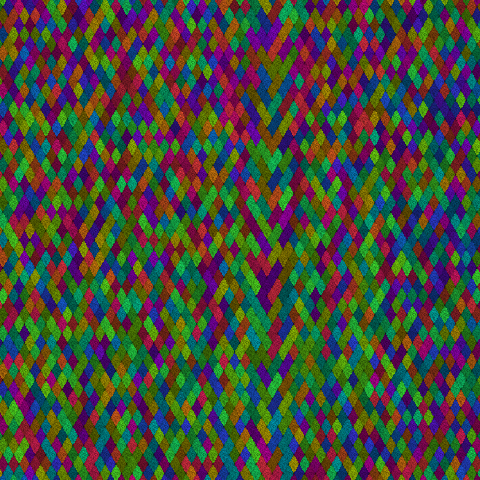
Hex Grid Tiling — axial-coord tessellation with fBM-filled cells
shader_legends_2 · HexGridTiling
A hexagonal grid is the canonical 6-fold-symmetric alternative to the square-grid hash tiling.
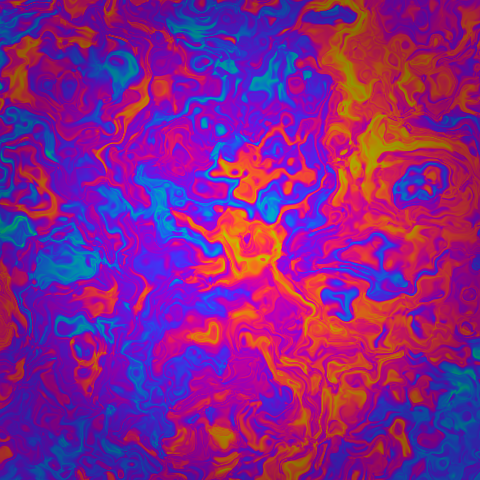
IQ Domain Warping — fbm composed with itself at 2/3 levels
shader_legends_2 · IQDomainWarping
Inigo Quilez's domain warping trick: feed a noise function *itself* as input coordinates, producing organic flowing patterns that no plain noise function can match.
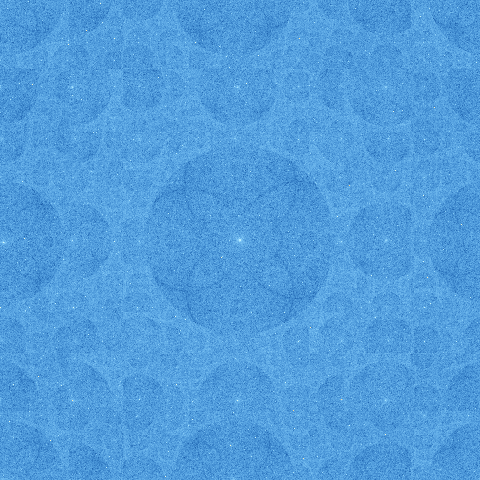
IQ Mandelbox (2D edition) — iterated box-fold / ball-fold / scale / translate
shader_legends_2 · IQMandelbox2D
The Mandelbox is a 3D fractal defined by the iterate v := scale * box_fold(ball_fold(v)) + c, parametrised by a 'scale' fold factor and the (r_min, r_fixed) ball-fold thresholds.
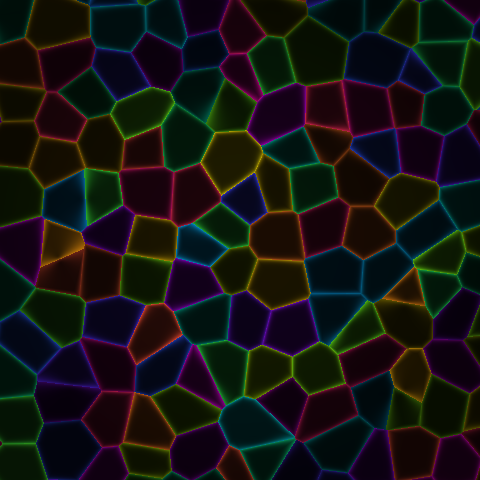
IQ Voronoi (cellular noise) — F1 / F2 distance field
shader_legends_2 · IQVoronoi
Inigo Quilez's classical 2D Voronoi / cellular noise: for each integer cell of the plane a single feature point is placed at cell_centre + jitter*(hash-0.5).
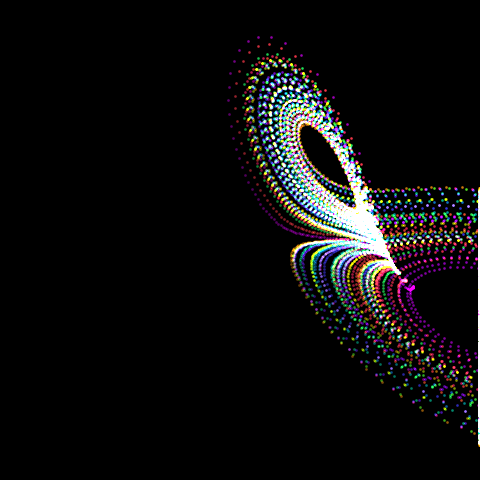
Lorenz Attractor (3D ODE) — strange-attractor trajectory with depth shading
shader_legends_2 · LorenzAttractor3D
The Lorenz system (1963) is the canonical strange-attractor: x' = sigma(y - x); y' = x(rho - z) - y; z' = xy - beta*z.
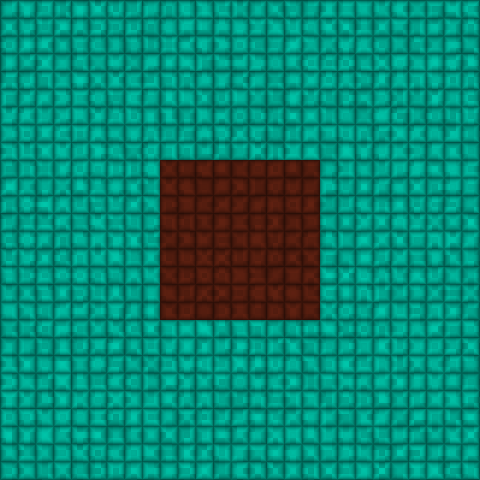
Menger Sponge, 2D Carpet edition — recursive 3x3 / centre-removal
shader_legends_2 · MengerSponge2D
The Menger sponge (1926) is a 3D fractal formed by sub-dividing each cube into 3x3x3 and removing the centre plus the six face-centres.
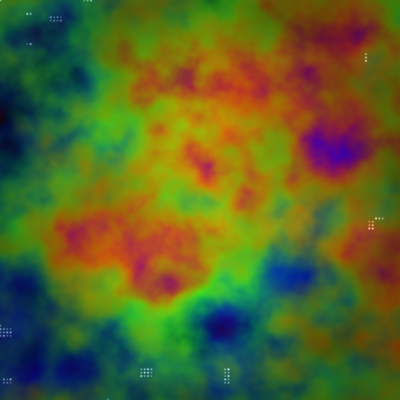
Animated FBM Nebula with Chromatic Aberration
shader_legends_3 · AshleyGAnimNebula
A multi-coloured, slowly rotating cosmic gas cloud built from 5 layers of FBM noise at different scales, each layer rotated by a different angle that varies with time.
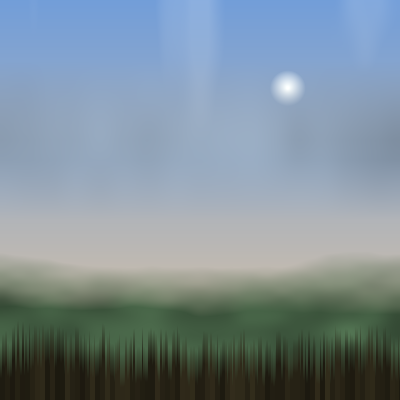
Atmospheric Perspective Landscape
shader_legends_3 · HubertyAtmospheric
A painterly 2D landscape built from depth-graded FBM bands: a soft sky gradient with a sun disc and cloud streaks, a low-amp haze band in the upper-middle, rolling green midground hills, and a sharp foreground silhouette of trees and grass.
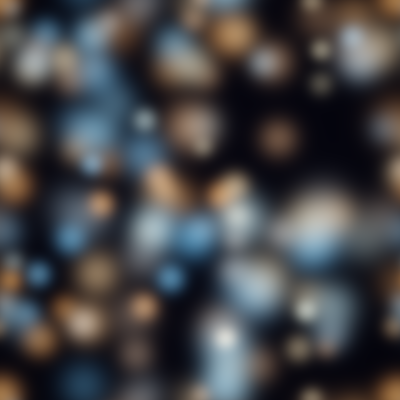
Bokeh Blur with Light Leaks
shader_legends_3 · TaterBokeh
A 2D bokeh effect built by stamping 50-200 soft Gaussian discs onto a near-black backdrop, each at a hash-determined centre, radius, and warm-to-cool colour.
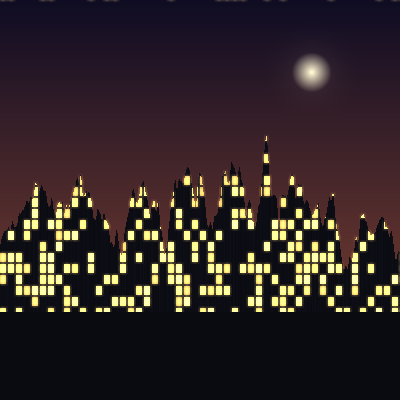
Hash-driven Procedural City Skyline
shader_legends_3 · DaveHoskinsHashCity
A 2D orthographic night-time cityscape whose per-column building heights come from 1D FBM noise and whose lit windows are a per-cell hash threshold.
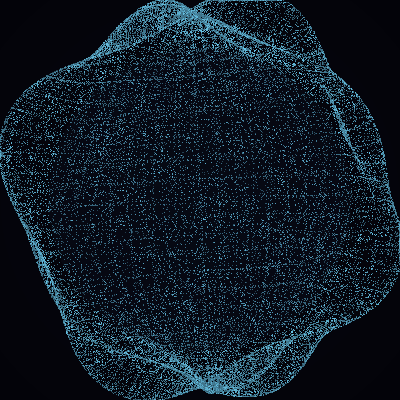
Recursive Spherical Displacement Wireframe
shader_legends_3 · IQDisplacementSphere
A wireframe sphere whose surface is recursively displaced by spherical harmonics of the form amp * sin(N * theta) * cos(M * phi), rendered as overlapping latitude and meridian polylines plus random surface dots.

Volumetric Clouds from Cellular + FBM
shader_legends_3 · BigWingsClouds
A painterly cumulus-cloud sky built from a Worley/cellular noise layer (cloud puffs) gated by a low-frequency FBM (large-scale cloud coverage) and a high-frequency FBM (in-cloud detail).
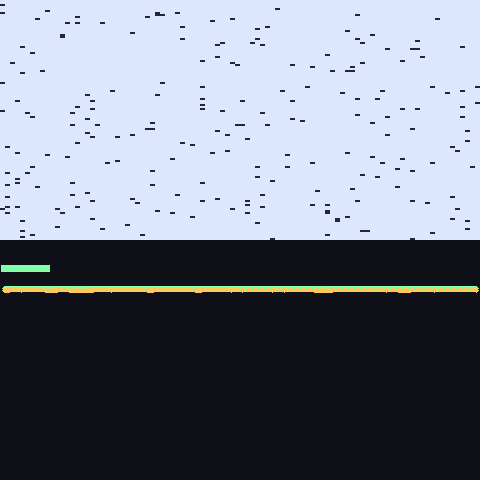
Genetic Algorithm (Evolve Toward Target String)
shiffman_pearson_textbook · geneticAlgorithmString
A textbook genetic algorithm that evolves a population of binary strings toward a target ASCII string (default 'HELLO WORLD!').
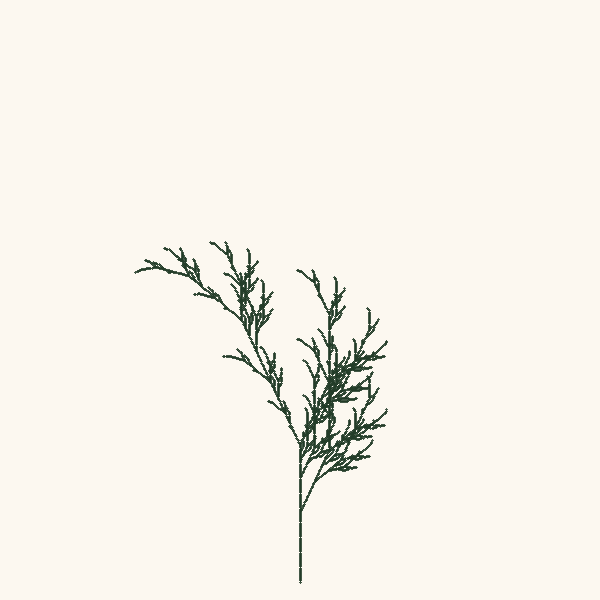
Lindenmayer L-System (Textbook Formulation)
shiffman_pearson_textbook · lindenmayerTextbook
Lindenmayer L-system string rewriting with a 2-D turtle interpreter, the canonical textbook formulation used in both Shiffman's Nature of Code Ch.

Mandelbrot Set (Escape-Time Fractal)
shiffman_pearson_textbook · mandelbrotSet
The Mandelbrot set rendered by escape-time iteration of z = z^2 + c on a window of the complex plane.
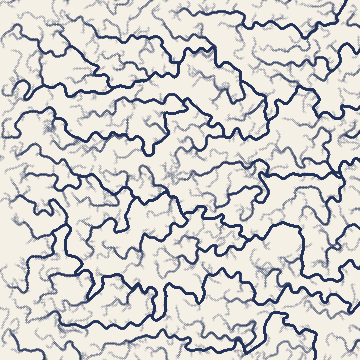
Perlin Noise Flow Field
shiffman_pearson_textbook · perlinFlowField
A 2-D scalar field of Perlin gradient noise is sampled on a coarse grid; each cell is assigned a heading theta = 2*pi * n.
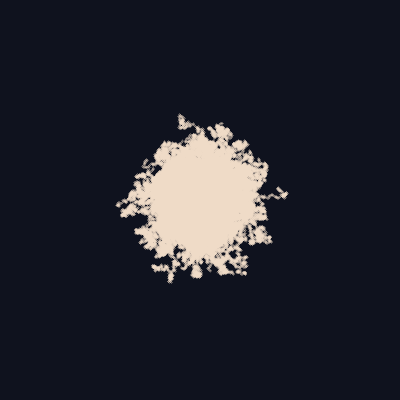
Random Walk / Drunkard's Walk
shiffman_pearson_textbook · randomWalkDrunkard
Many random walkers each start at the canvas center and take a stochastic 2-D step every tick.
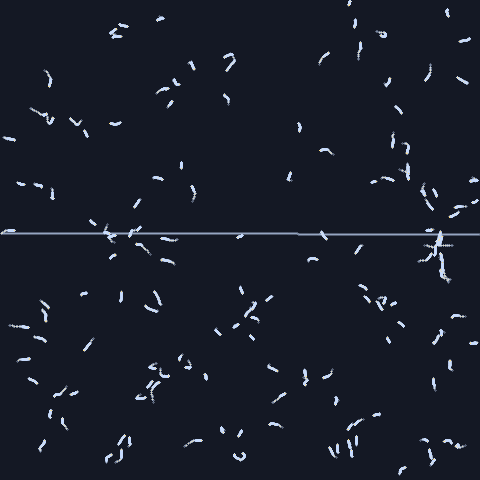
Reynolds Boids (Separation / Alignment / Cohesion)
shiffman_pearson_textbook · boidsClassic
Reynolds' classic boids flocking model.
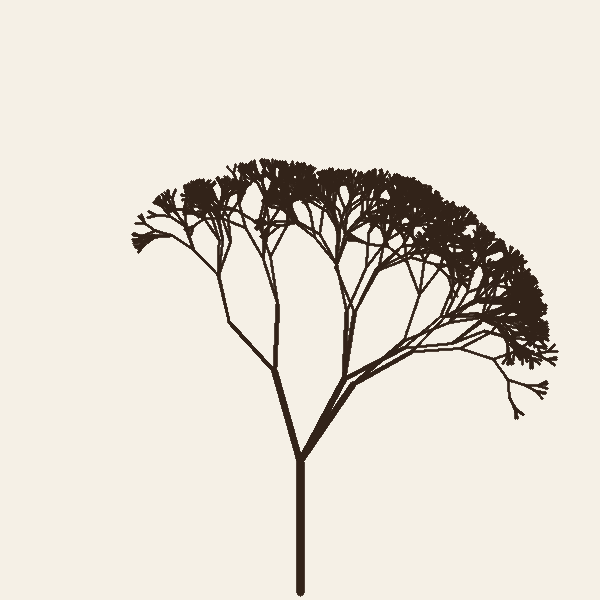
Stochastic Recursive Fractal Tree
shiffman_pearson_textbook · recursiveTree
Stack-based stochastic fractal tree from Shiffman's Nature of Code Ch.
Wolfram Elementary 1-D CA (Textbook)
shiffman_pearson_textbook · wolframCA1DTextbook
The textbook Wolfram elementary cellular automaton.

Generative Type Letterforms
toxi_openframeworks · GenerativeTypeLetterforms
Letterforms assembled from a 9×9 stroke grid alphabet (A–Z subset), then modulated by a parametric function (bar widths and stroke positions follow `a * sin(b*x + c)` style curves) and optionally recursively subdivided into smaller marks.
Gray-Scott Reaction-Diffusion
toxi_openframeworks · ReactionDiffusionGS
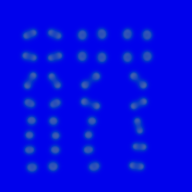
The canonical two-species Gray-Scott reaction-diffusion model on a periodic square grid: dU/dt = Du*lap(U) - U*V^2 + F*(1-U), dV/dt = Dv*lap(V) + U*V^2 - (F+k)*V.
Median-Cut Color Quantizer
toxi_openframeworks · ColorQuantizer
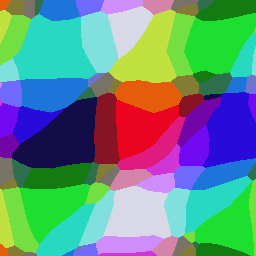
Heckbert's 1982 median-cut color quantization applied to an evolving procedural gradient + low-resolution noise wash.
Pixel Sort (Glitch Art)
toxi_openframeworks · PixelSort
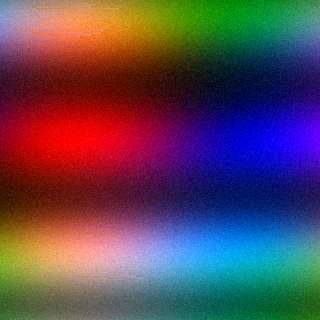
Per-row pixel sorting à la Kim Asendorf's `ASDFPixelSort` and Karsten Schmidt's own glitch-art Processing sketches.
Sound-Reactive Particle Field (Synthetic Audio)
toxi_openframeworks · SoundReactiveField
Particles advected by a force field whose horizontal component is driven by a synthetic audio signal: a chain of N sinusoids at different frequencies/amplitudes (the 'audio'), with the audio's instantaneous value plus its time derivative ('beat onset') driving the field.
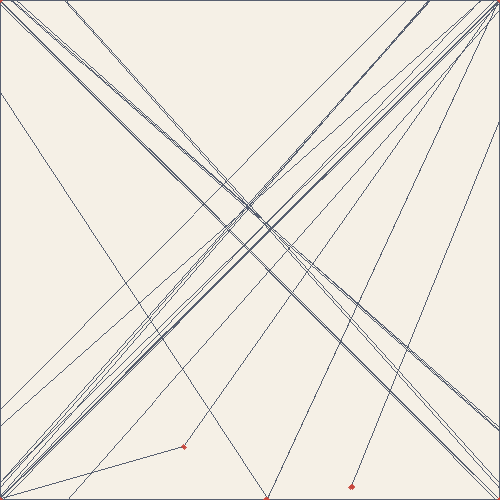
Verlet Particle-Spring Network
toxi_openframeworks · ParticleSpring2D
A Verlet-integrated particle network connected to its k-nearest neighbours by Hooke's-law springs.
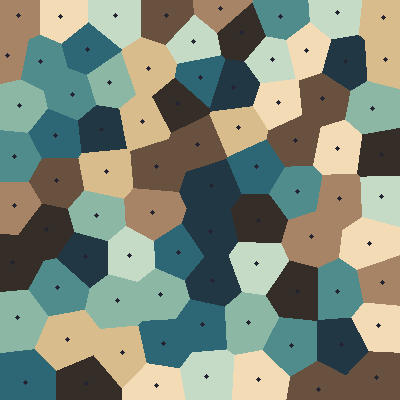
Voronoi Tessellation with Lloyd Relaxation
toxi_openframeworks · VoronoiRelaxation
Lloyd's algorithm applied to a jittered point cloud: each seed is replaced with the centroid of its Voronoi cell, repeatedly, producing ever-more-uniform polygonal cells.
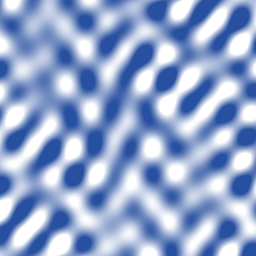
Additive Waves — 3D Terrain
toxi_toxiclibs · AdditiveWaves3D
A 2D height-field terrain driven by the sum of multiple wave generators (sine, FBM noise, sawtooth, constant offset) defined in Karsten Schmidt's toxiclibscore wave module.
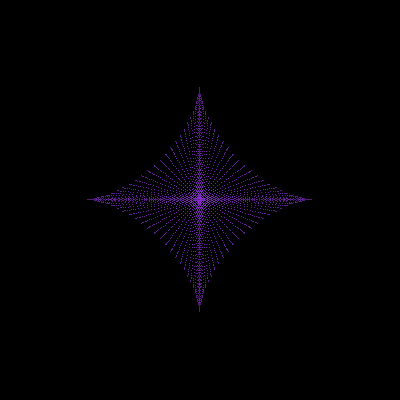
Super-Ellipsoid Mesh
toxi_toxiclibs · SuperEllipsoid
A super-ellipsoid is a 3D primitive that smoothly interpolates between a sphere, a box, and a pinched pillow via two shape parameters e1 (longitude exponent) and e2 (latitude exponent).
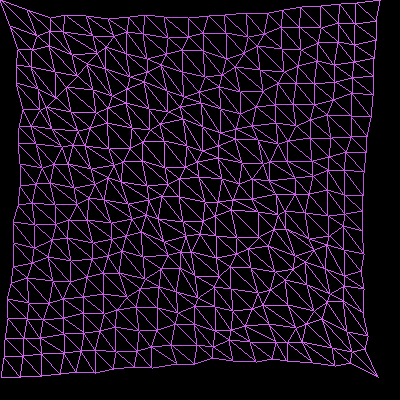
Verlet Physics 3D — Mass-Spring Cloth
toxi_toxiclibs · VerletPhysics3D
A 3D mass-spring system integrated with Verlet position-based dynamics and Jakobsen-style constraint relaxation.
Winged-Edge Mesh
toxi_toxiclibs · WingedEdgeMesh
A half-edge / winged-edge data structure for triangle meshes, designed for sub-million-triangle scenes where simple flat vertex/index arrays become cumbersome.